Martina Benešová-Schäfer: An obsession with radioactivity
In medicine it was a step forward. Martina Benešová-Schäfer co-developed a radiopharmaceutical that makes it possible to detect and image prostate tumours. Put simply: after the drug is administered, you can see how many metastases a patient has and how they are spreading through the body. That then makes it possible to adjust dosage so that the body is exposed only to the optimal dose of the radiopharmaceutical, eliminating the side effects associated with the nature of the disease and with the administration of other therapies.
Her story is remarkable too for the speed with which she managed to patent the radiopharmaceutical and "sell" a licence to it. The market value of the drug she successfully patented is estimated in the billions of dollars. The whole process of transferring science into business was demanding, and the support and backing of the German Cancer Research Center in Heidelberg, where Martina works, was essential. She will now pass on her experience, advice and tips on transfer to the laureates of the Neuron Award for connecting science and business, of which she is the guarantor.
Martina, where did your passion for chemistry come from?
When I was small my father used to take me to various mineralogical and geological sites, and what I liked best were exactly those stones that were radioactive, because they are beautifully coloured. When I was deciding what to do after grammar school, I went to Charles University, where I started relatively broadly — chemistry, physics, biology, that was clinical toxicology. In the end the decision to go into nuclear chemistry and later radiopharmaceutical chemistry came from the fact that I wanted to work practically with radioactivity in a field where it has a very positive effect. What decided it was my passion for radioactivity and the wish to work with it in an area where it helps — in my view its best application is nuclear medicine.
And yet your physics teacher at primary school almost put you off studying science. How crucial are teachers on the path of a future scientist?
In my view they are absolutely essential; it is enough for one field or another to be spoiled for you at the start, which in my case was physics, which I loved terribly, but then it all got incredibly worse and it was completely out of the question for me. Fortunately that changed with another teacher. But if someone is unlucky enough to be put off a subject they like and are good at, that is fatal. When I think about how a scientist develops and studies, the very first step is teachers.
When did it change?
At university; I was incredibly lucky with my supervisor, for instance, who became part of my family. He taught me how to write, how science is and is not done, so a supervisor is another essential point. Thanks to that I try to be a good supervisor myself. If I had had someone who treated me unfairly, I could practically be the same. So alongside a teacher, a supervisor also shapes a scientist, and it is reflected in how they then behave towards their own people.
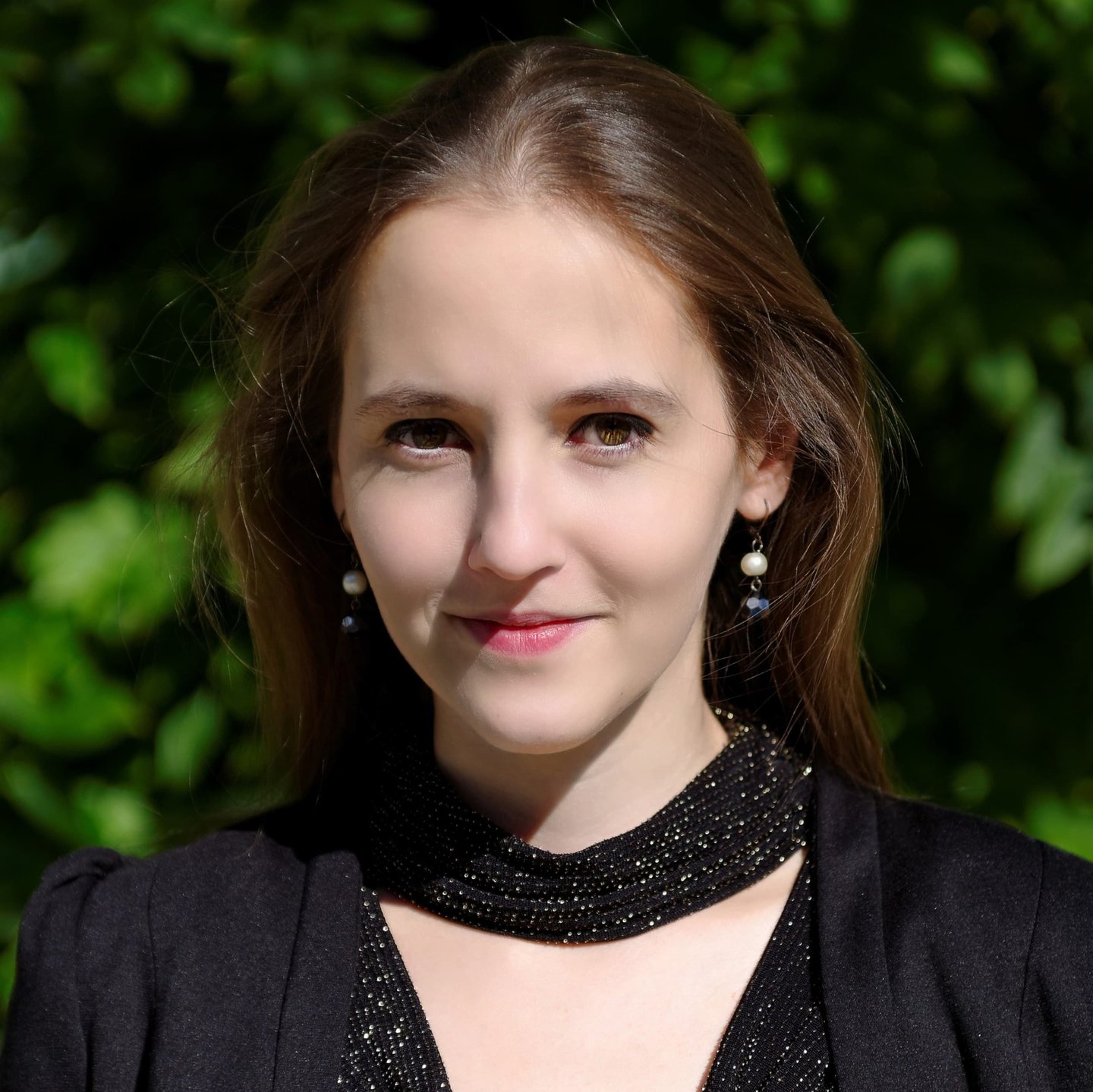
"I still joke that my mission is to protect radioactivity. And to talk about its good side too, not just the 'bad' one. Radioactivity simply fascinates me.
And what do I still enjoy about it? Whether it is so or not. Whether we are able to create something that works exactly as we would wish."
It is probably not hard to guess that your role model is Marie Curie-Skłodowska, is that right?
Marie Curie-Skłodowska without doubt, especially after I read her biography by her daughter Ève Curie. Later there were a few other people I admired, but not all of them from science — from the world of music, for instance, Ozzy Osbourne. Of course Madame Curie is the one.
Radioactivity is your first passion; the second is doing science in Germany. What won you over to our neighbour?
I was a Germanophile from an early age; German appealed to me more than any other language. My father and I used to travel to various mineralogical exhibitions in Munich, and even as a small child I picked up a word here and there and it was clear that I would one day go to a German-speaking country.
After my master's there were various doctoral scholarships available in different countries, but the offer from the German Cancer Research Center in Heidelberg was one of the best, and that is where I was awarded a scholarship.
At Neuron Science Night, where scientists, businesspeople and the Neuron Foundation's patrons met, you talked about the superb conditions for science in Germany. It almost sounds as if you work in a completely different world…
I am fascinated by how great the differences can be between neighbouring countries. We are very similar, but it is as if we lived in completely different centuries. Sometimes you have to point out the things that simply do not sit well with you. That is how it is. Science is a little different. It teaches us a great capacity to adapt, which comes in useful in life.
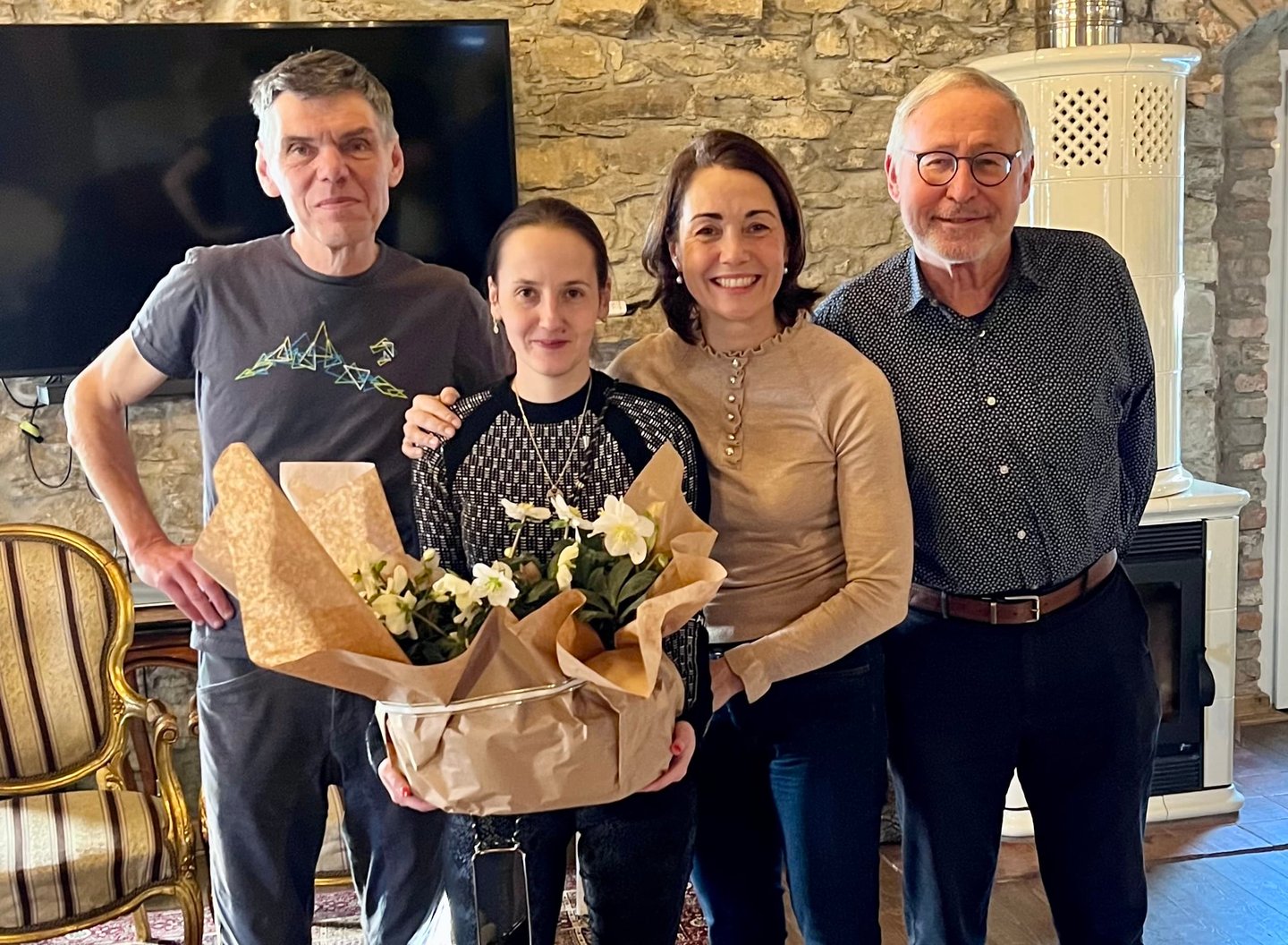
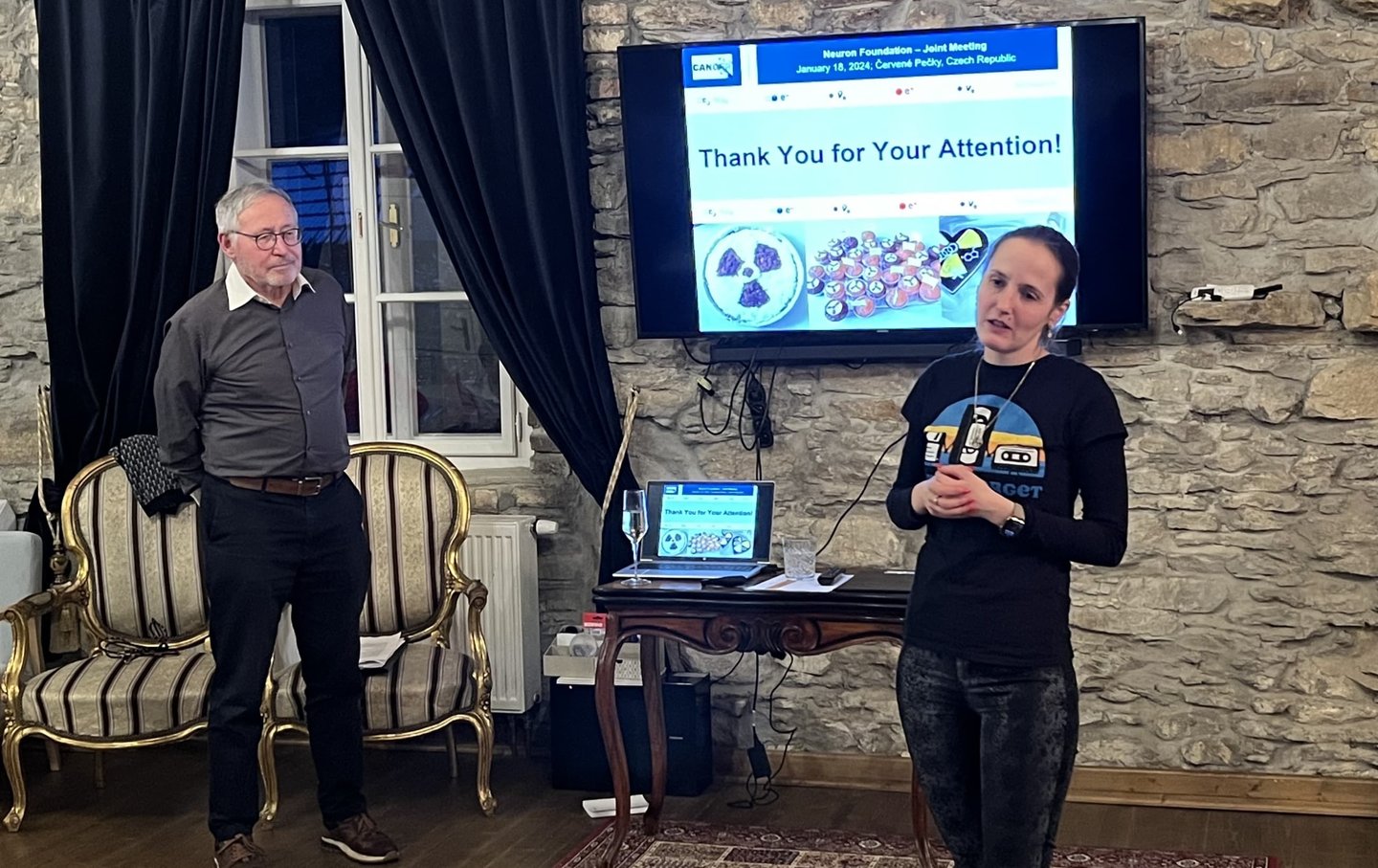
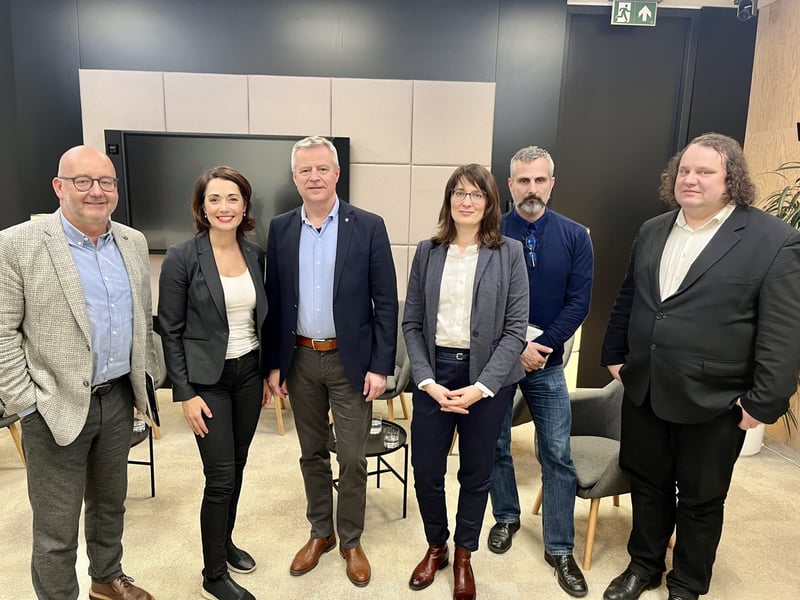
Dalibor Dědek (entrepreneur and patron of the Neuron Foundation), Martina Benešová-Schäfer, Monika Vondráková (director of the Neuron Foundation) and Zdeněk Hostomský (IOCB) at Neuron Science Night, where science and business were discussed
What are the biggest differences?
Here I have to mention that the German Cancer Research Center in Heidelberg is not a classic university, but not a company either; we are something in between. One of the biggest differences is that we can decide practically everything ourselves, but at the same time we bear full responsibility. I have no intermediate level — a professor, a head of department I have to ask… trust, freedom and the transfer of responsibility to a young scientist very early on are at a high level in Germany. But another difference is a different kind of humour; what passes as a joke in the Czech Republic would end a career in Germany.
In short there is a great deal, from mentality and humour to the way junior researchers work in Germany.
You mentioned that the institution in Heidelberg is a mix of university, hospital and research centre in one. How crucial is that?
For me it is absolutely ideal. Without cooperation with a university the German Cancer Research Center would not be able to award doctorates, but because that option exists, it strikes me as absolutely ideal. Everything is connected and you have the whole development pipeline, and even if you want to cooperate with another university or hospital you of course can. But having all this under one roof is an incredible advantage.
Another fundamental difference between Czech and German science may be grants and funding in general. How do you see that?
I am not a great fan of grants; I do not take much interest in them. I always found funding by being co-financed by a foreign company, which in my case was a grant. In Germany grants are not so important; we have funding directly "from the building", and it is not small. It can be funded from various patents. In the Czech Republic grants are essential; scientists have to chase them in order to do top-level science. In Germany that is not the main thing that has to be in place before science can be done.
They say science is a long-distance race. How much does that affect scientists' motivation, when you simply do not know whether the path you have taken is the right one… What helps then?
Roughly 98% of things do not work or turn out to be useless — that is a fact. At the start it is important to accept this. It is not entirely easy, it is very frustrating, but the sooner scientists accept it and understand how it is, and stop trying to shape the laws of nature according to what we would like, the better. Of course you feel sorry when you find that it does not work the way you thought. What helps is probably the most basic thing of all: breathe in, breathe out, choose a different strategy and approach it cheerfully.
Your discovery was very successfully patented. But how much does that work exhaust a scientist? And are you even prepared for it?
I had no clue at all; I absolutely did not know how such things work, what it all means, what it costs, what may come. If I had known everything it involves, I would have said we would just publish and leave it at that.
It is a 100% job; I cannot imagine a scientist managing it alone.
Can that discourage scientists from even trying to commercialise their research?
I hope not. On the other hand it could be a good motivation for more research in the Czech Republic to be commercialised. If there are more experts in the Czech Republic who take that burden off scientists' shoulders, having to deal with all the business, contracts, funding of patent offices and so on, that will be terribly good.
Would it make sense for a practical seminar of that kind to exist as early as university?
We have already started that — new employees and students go through an introduction that makes clear how intellectual property has to be protected, how to handle data, ideas and so on. We also have specialised courses.
Where radiopharmaceuticals are concerned, it was a bullseye. What is it like to live with having contributed to a drug that is already changing lives? Do you see yourself as a heroine of a kind?
At the start I was incredibly excited and told myself that even if it helped just one patient, that would be satisfaction for me and it would be worth it. That is gradually changing and I am very glad about this result. But I have already got the main thing out of the way; I proved that my colleagues and I are able to create something meaningful. Working in science is now somewhat easier and more enjoyable for me. The pressure to perform has fallen away. It was incredible luck — it shapes my life and I am incredibly glad about it. All of that helps me be a better boss and a better scientist.
But I have never thought of myself as a heroine; I do not feel like Wonder Woman (laughs).
You did not stop; you threw yourself into further research. Can you be more specific?
Our main focus now is breast cancer; I would like to be "fair" — if prostate, then breasts too. But I am not opposed to another type of cancer either. I have become interested in cancer of the salivary glands, which is relatively rare but incredibly deadly and unfortunately comes at an early age. Getting to know and working with one type of cancer always creates an interest in another type. You cannot dissolve yourself across different kinds; then science does not move forward quickly but rather spreads sideways.
Will we one day be free of cancer?
I do not think we will ever be entirely free of cancer. If we are lucky, cancer will one day be the kind of disease that can be held in check over the long term. Cancer is a genetic disease, it is part of us, and that is not entirely simple to remove.
There is a lot of talk now about pressure to perform, overload, burnout and stress. How far is our current lifestyle behind the development of cancer?
I would say its influence is not small. Lifestyle affects our genetic burden, but the consequences may only emerge in the next generation. How we behave now may have a greater effect on the incidence of practically anything in our descendants. That is why I would not take lifestyle lightly.