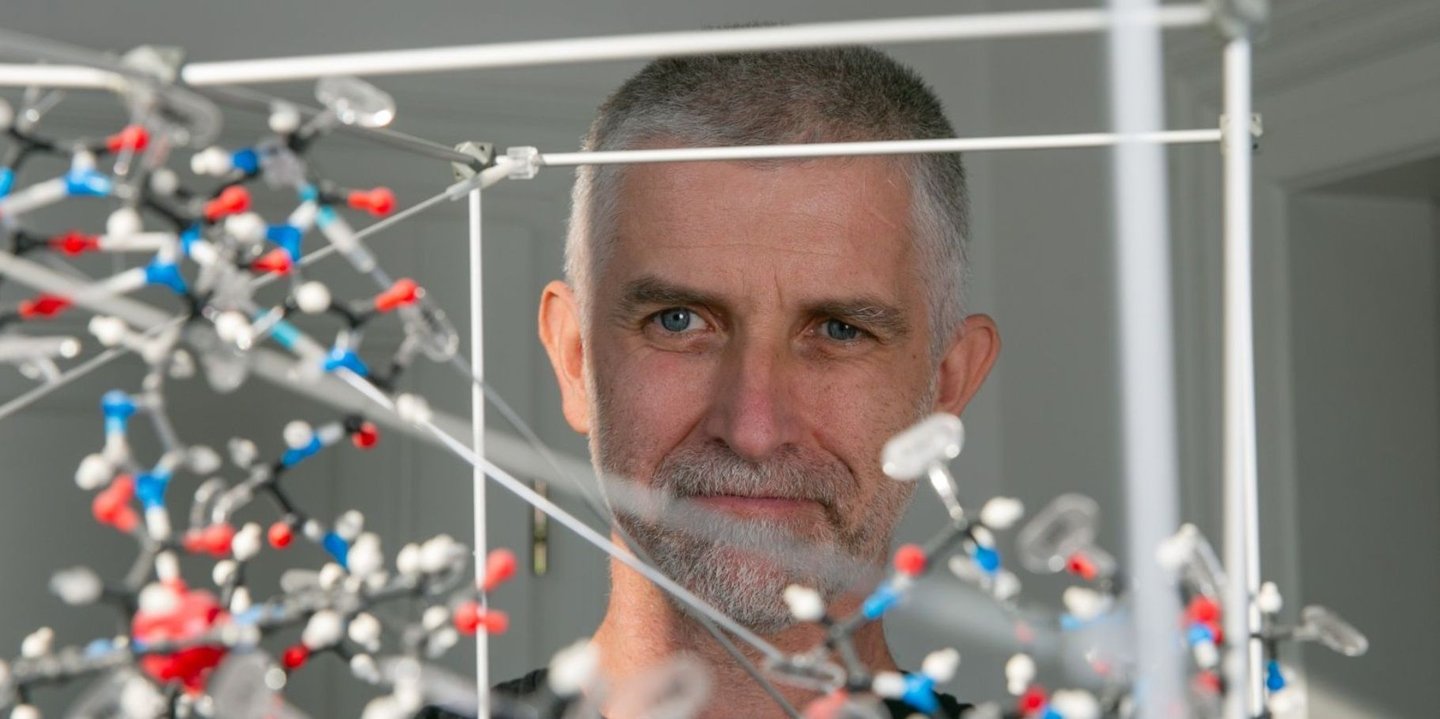
Jan Kuneš heads the scientific council for physics and does not believe in dogmas
Together with Jan Kuneš, a theoretical physicist, the selection of outstanding laureates on the Neuron Foundation's council will be guaranteed by the astrophysicist Ondřej Pejcha and the particle physicist Alexander Kupčo.
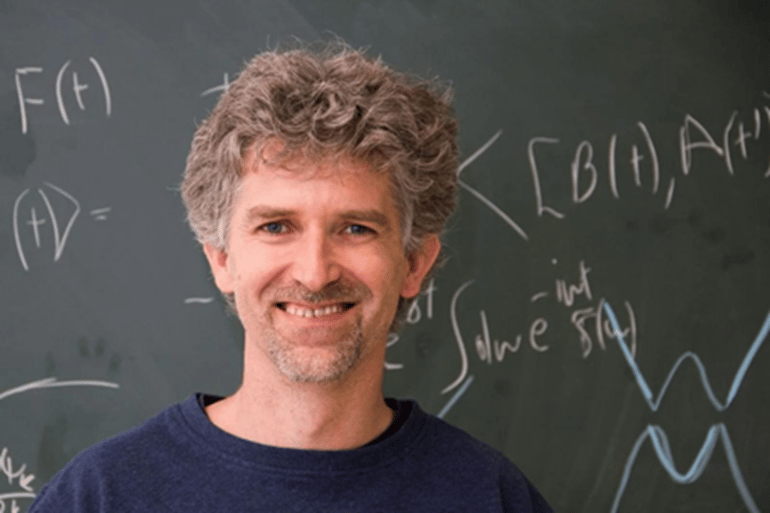
Together with Jan Kuneš, a theoretical physicist, the selection of outstanding laureates on the Neuron Foundation's council will be guaranteed by the astrophysicist Ondřej Pejcha and the particle physicist Alexander Kupčo.
When Jan Kuneš talks about physics, he does not come across as someone who revels in grand words about the mysteries of the universe. He speaks precisely and calmly, sometimes with light irony and with evident pleasure that things make sense. He is a theoretical solid-state physicist. It is precisely this combination of focus and a willingness to doubt "the obvious" that makes him a striking figure in Czech physics. And the new guarantor of the Neuron Foundation's scientific council for physics. As chair, Kuneš has brought in the astrophysicist Ondřej Pejcha of the Faculty of Mathematics and Physics and the particle physicist Alexander Kupčo of the Czech Academy of Sciences.
He takes over at the head of the physics council with an impressive international career behind him, an ERC grant won in 2015, and while settling back into the Czech academic environment. What attracts him to his new role at Neuron is above all the chance to look at physics on a broader canvas than his own specialisation requires. "Our panel's main task is to select the winners of the Neuron Award for outstanding young scientists," Kuneš says. And that is exactly what appeals to him. Not only deciding on prestigious awards, but also the chance to get a broader overview of what is emerging in physics right now. Until recently he was a panellist and evaluator in European Research Council (ERC) competitions.
From Vienna back to the Czech Republic
Jan Kuneš came to Brno in the autumn of 2024 thanks to the MUNI Award in Science and Humanities (MASH) programme. After years spent abroad, at the University of California, Davis, then in Augsburg and most recently at TU Wien, he took up the role of associate professor at Masaryk University. Moving after seven years in Austria was not entirely simple. "For the first six months I commuted from Vienna. Then we moved here, and my wife still works in Vienna, so now she is the one commuting," the physicist says. The one hundred and fifty kilometres between Brno and Vienna are therefore not an exceptional distance in their family but part of ordinary daily organisation.
Nor is there any escaping physics at home! His wife, a native Pole, is also a theorist. "She works on essentially the same thing I do. Theoretical physics. Very similar, slightly less focused on materials, slightly more focused on method," Jan Kuneš says. The two young scientists met at the University of Augsburg, where they were both postdocs. And as Honza admits with a smile, physics often comes up at home even after dinner: "We talk about science, of course."
Vienna gave the family a great deal, so their two daughters are naturally trilingual, having grown up between Czech, Polish and German. Ever the scientist, Kuneš worked out that fifteen languages were spoken among the children at the Vienna university nursery: "It was a veritable Babel. There was even a boy who spoke five languages," recalls this likeable professor, who himself does world-class science.
Asking the right "why" questions
All his life Jan Kuneš has moved at the boundary between very specialised and at the same time open thinking. He is known above all as a theoretical solid-state physicist. He studies materials and their structure, uses computational methods and looks for answers to the question of why substances behave the way they do.
What does he enjoy most? "What I enjoy about computational physics is that you have a kind of power. In the computer you can very easily play with different parameters and really see in front of you what happens to it all," he says, captivated. If you raise the temperature, this and that happens. If you then turn another imaginary knob, something else happens. An experimenter is firmly bound by the reality of the laboratory, whereas a theorist can model the world, try things out, go back, swap different conditions around: "You have more knobs, and you can turn them more easily than your experimental colleagues."
But the intoxicating "power" he speaks of is not absolute power. It is more the pleasure of understanding phenomena. Kuneš does not concentrate on striking formulations but on mechanisms. "I enjoy solving problems, simply understanding how things work. When you have a material, you want to understand why this particular material is magnetic and another is not," he says. Perhaps that contains the essential core of him as a scientist. It is not only the result achieved that enchants him, but the path to it. The question why.
And it is here that one of the qualities he values most in science also becomes clear. Asked to name the most important quality of a scientist, he does not reach for the usual words such as perseverance or curiosity. "It seems to me that what matters is a kind of scepticism, or distrust of authority," Kuneš says with conviction. In his view what matters is not taking things simply because they are written in textbooks or have long been repeated. "Being able to ask questions and not to believe something just because someone said it," explains the professor, whose work includes altermagnets — a live topic in solid-state physics.
"Of my recent work I value the fact that we predicted so-called magnetic circular dichroism in altermagnets," he says. It was, in his view, a fine situation in which theory and experiment came together precisely. First they had their own theoretical prediction, which was then confirmed.
In the role of evaluator and guarantor
Jan Kuneš today leads a small but distinctly international group at Masaryk University. He has two postdocs, a doctoral student and diploma students; people come into the team from India and Vietnam. With some amusement he recounts that whereas in Vienna, where there was pressure for greater representation of women in physics, his group was entirely male, in Brno he suddenly had an entirely female group after his arrival, without any HR incentive at all. "What I like about our institute is that it is intimate, but the atmosphere is very pleasant. The students here are good," Professor Kuneš says of its quality.
From abroad he brings exceptional experience of what excellent science looks like from the point of view of an evaluator (ERC) and of a working physicist. His relationship to the Neuron Foundation was shaped, he says, mainly by the publicly visible award: "You see the Neuron Award in the media and it is of course a prestigious award." Now, as chair of the scientific council, he will be directly involved in how that prestige is translated into the concrete selection of people and ideas. It can be expected that he will bring precisely what he himself considers most valuable: not believing dogmas, looking beneath the surface and searching for the question that has not yet been asked well enough.
Prof. Jan Kuneš, Ph.D.
This theoretical solid-state physicist works at the Faculty of Science of Masaryk University, where he is an associate professor at the Department of Condensed Matter Physics (MUNI Award in Science and Humanities, MASH). He graduated from the Faculty of Mathematics and Physics of Charles University in 1997 and gained his doctorate there in 2002. From 1998 to 2002 he was a doctoral student at the Institute of Physics of the Czech Academy of Sciences, then worked at the University of California, Davis (2002–2005), and subsequently at Universität Augsburg as a Humboldt fellow and then a researcher (2006–2009). From 2010 he was a senior researcher at the Institute of Physics of the Czech Academy of Sciences. From 2016 to 2023 he did research at TU Wien. He works on condensed matter theory, electron correlations, magnetism, the theory of photoemission and optical spectroscopy, and on numerical many-body methods. He is co-author of more than 135 studies (in journals including Physical Review Letters and Nature Photonics), which have been cited more than eight thousand times. He has also received the Bolzano Prize of Charles University (2002), a prestigious Humboldt fellowship (2005), a Purkyně fellowship (2008) and a coveted ERC Consolidator Grant (2015).