Laureate Chemistry
Ing. Vít Svoboda, Dr.
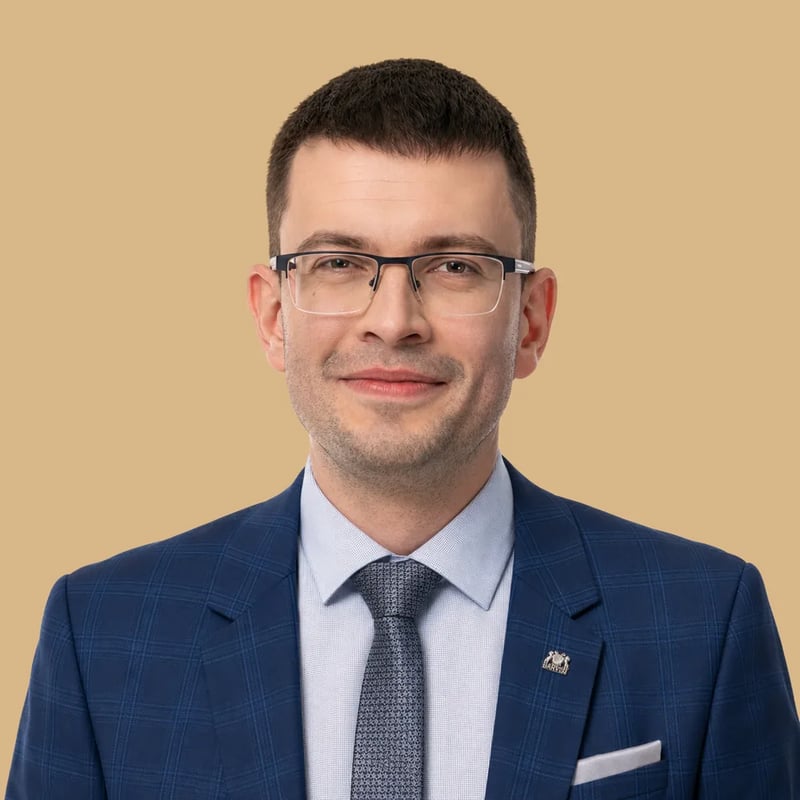
Neuron Award laureate for promising scientists
The fastest movements of molecules last less than a thousandth of a trillionth of a second. It is a span of time most of us cannot even imagine. Vít Svoboda can film it, thanks to a special technique and laser pulses. That lets him watch chemical reactions in real time and study the fastest processes in our universe.
He took his doctorate at ETH in Zurich, then gained experience in Germany and the United States. Since 2024 he has led his own research group at the University of Chemistry and Technology in Prague. He publishes regularly in the most prestigious journals, such as Science, Nature Physics and Nature Chemistry. To his name he has entirely new findings about the behaviour of electrons in water, the generation of high harmonics in liquids and, above all, the study of the dynamics of chiral molecules as they interact with light.
Why did he receive the Neuron Award?
With ultrashort pulses of light he can slow down time and make visible what is otherwise invisible. His research reaches far beyond its own field — it uncovers the fundamental principles of the dynamic behaviour of molecules, which may lead to breakthrough practical applications.
He is actively engaged in popularising science and is among the regular respondents of the Ask a Scientist initiative. He is a prominent figure of the youngest generation of Czech physical chemists.
Can you recall a eureka / aha / wow moment of your own?
When I first measured a time-resolved signal from a chiral molecule. I naively expected that if you split a chiral molecule with light, that is, photodissociate it, the molecule would stop being chiral. And lo and behold, it does not. It depends on the structure of the molecule and on the time scale.
Do you remember any childhood questions that kept you awake?
For a long time I puzzled over why the sky is dark when it is full of shining stars. I was probably quite annoying with questions like that, because when I was about seven I was given the book The Stars and Us. It was packed with complicated mathematics, but that did not put me off. That is probably where my fascination with light was born, and I have stayed with it ever since.
Which five words or phrases describe you?
Talks fast, is in a good mood, has a sense of order, likes running, likes sleeping and works a lot.
If you could have any superpower, what would it be and why?
I would like to be able to move at the speed of light and keep my mass. The advantage would be that time does not pass for light, so if I had a lot of work I would just start moving really fast and — bang — infinitely much time.
What must not be missing from a recipe for good science?
For me it is room for mistakes. We learn from mistakes. So when we are afraid of making them, that is an enormous problem. Sadly, science today is built largely on performance, where room for mistakes is somewhat lacking, which is a mistake — so let us hope we learn from it soon.
Science and family — how do they rhyme for you?
Science swallows a great deal of time, and so does family. So it is certainly demanding to balance the two sensibly. But it can certainly be done; my colleagues who already have families do it, and I think they neglect neither one nor the other.
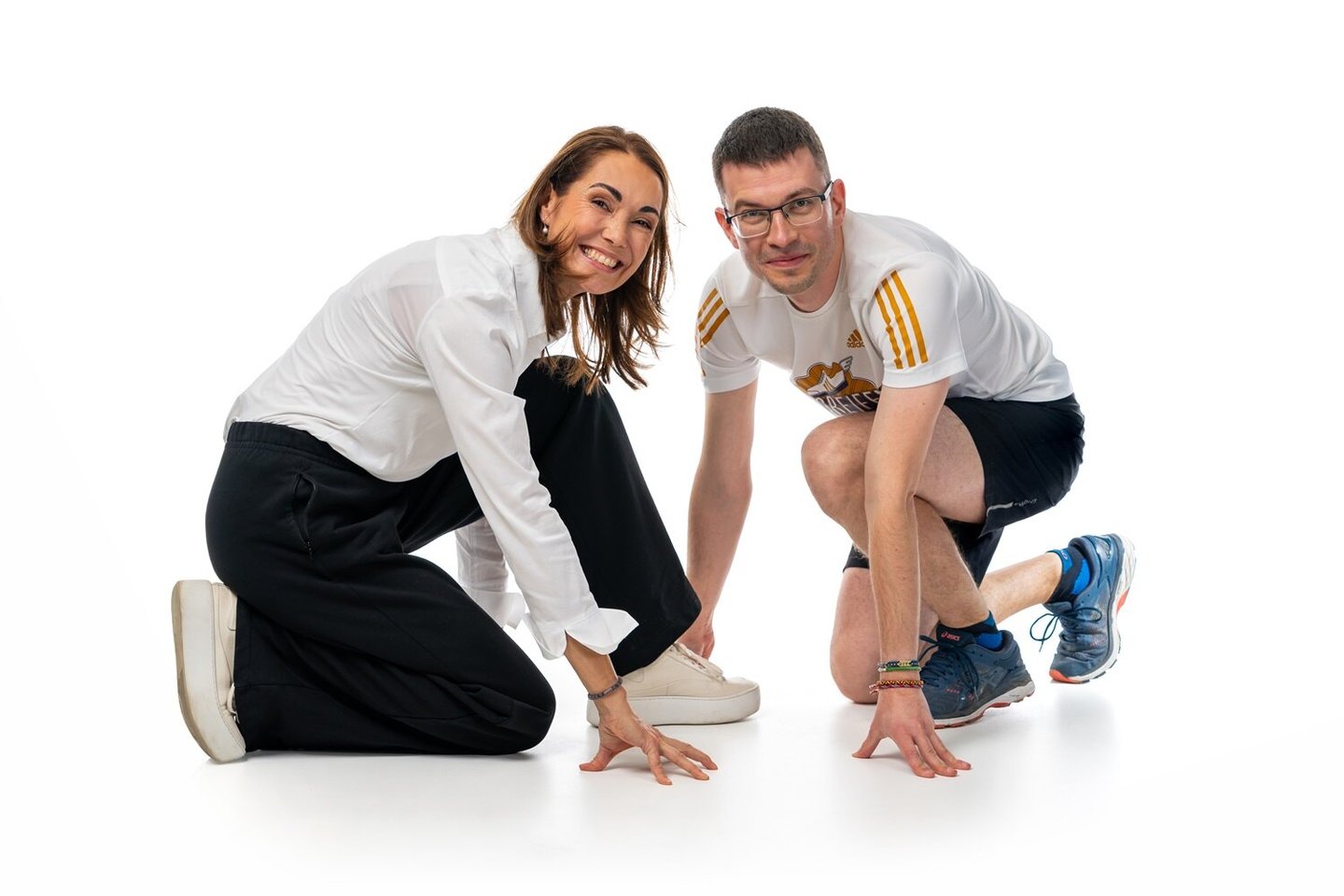
“Being afraid of mistakes is an enormous problem. Sadly, science today is built largely on performance, where room for mistakes is lacking — which is a mistake.”