Laureate Computer science
doc. RNDr. Martin Tancer, Ph.D.
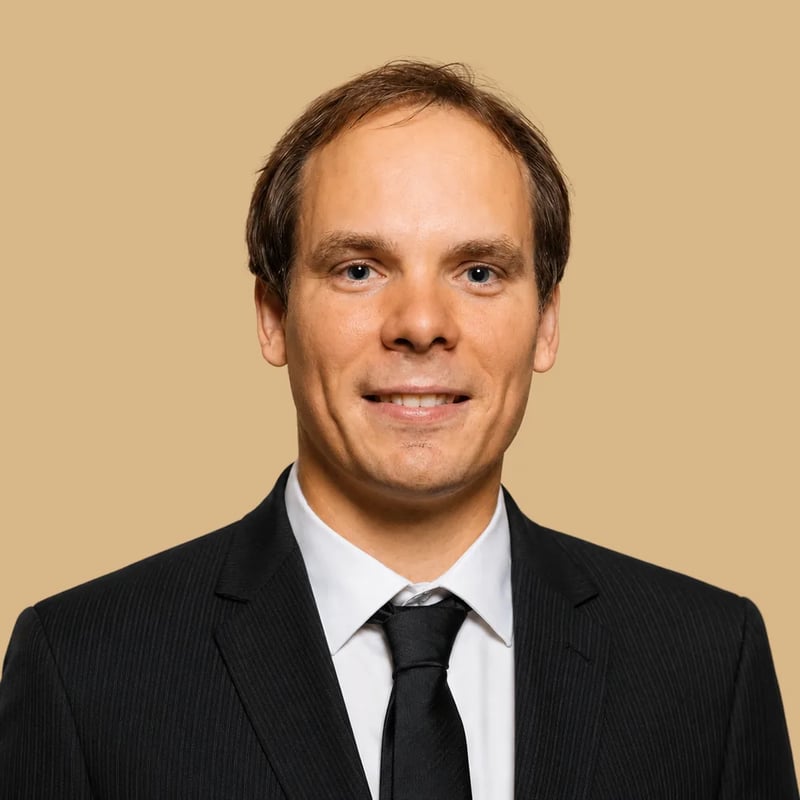
Neuron Award 2021 laureate for young promising scientists in computer science
The results of Martin Tancer's research belong to computational topology, where he seeks efficient algorithms for problems connected with transforming spatial objects. Such problems arise in computational geometry, robotics and structural biology, for instance.
In recent years Martin Tancer has achieved several fundamental results on the computational complexity of embedding two- and three-dimensional objects into three-dimensional space. These results are notable for their depth and are highly valued by the research community.
How would I explain what I do, as clearly as possible, in seven short sentences?
I study the computational complexity of topological and geometric questions. Not every problem we would like to solve on a computer can be solved or computed quickly. For certain types of problem I try either to design suitable algorithms or, on the contrary, to show that the barriers are so fundamental that no fast algorithm is possible. One example of such a problem is the so-called embedding of simplicial complexes in dimension 3.
With a great deal of licence it can be likened to modelling a building where we are told which wall connects to which, but where the individual walls can be enlarged, shrunk, deformed or swapped around at will where they meet. My research is theoretical, on the boundary of computer science and mathematics. Concrete applications in this area come only with time, but past experience shows that some things could never be worked out if theoretical research were not done.
What do I enjoy at least as much as my work?
Time spent with my girlfriend, usually somewhere outdoors in nature.
What is the greatest obstacle I have overcome in my life?
You have hit on quite a personal subject here. It was my father's death when I was nine.
Talent, temperament, hard work, luck, something else — what decides success?
It has to be balanced; when there is a lot of one thing and little of another, that usually does not help. And patience matters too.
What do I consider the greatest success I have achieved?
Scientifically, the results on the embedding and so-called shelling of simplicial complexes, which made it into prestigious international journals. On a human level, though, I consider it a success when a person can find ways to live a meaningful and happy life. And I believe I can find them.
What would I change in the world if I had the power?
I probably have no ambition to change the world directly. Of course I notice the subjects that resonate today, such as equality of opportunity or sustainable development. But I am an optimist in believing that the current public debate will lead to improvement.
What is the greatest challenge facing my field and science in general?
I do not believe in one greatest challenge that we solve and then we are done. To me science is an enormous number of partial challenges. What we find out can then gradually be assembled into something bigger and bigger. What matters most is diversity. If I am to name at least one specific subject, I am curious how quantum computing will turn out — whether it will be possible to bring it into practice.
Martin Tancer in the media (in Czech)
- Neuron Awards 2021 debate with the laureates