Laureate Medicine
Prof. MUDr. Eva Kubala Havrdová, CSc.
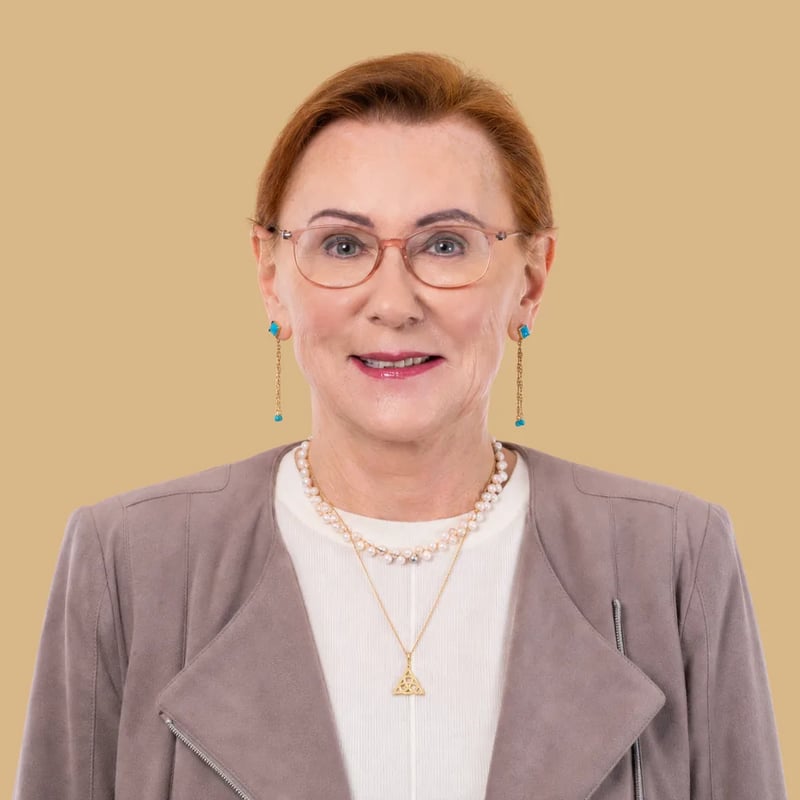
Neuron Award laureate for lifetime contribution to science
Eva Kubala Havrdová has changed the lives of thousands of people. The honoured scientist, who works at the Department of Neurology of the First Faculty of Medicine of Charles University and the General University Hospital, is among the doctors who fundamentally changed the shape of care for patients with multiple sclerosis — in Czechia and in the world. The professor of neurology from the First Faculty of Medicine was there at the birth of modern biological treatment of the disease, pushed through the international NEDA standard (for assessing the effectiveness of pharmacological treatment) and fights for therapy to be started as early as possible, even before clinical symptoms break out.
She founded and leads the Centre for the Treatment of Multiple Sclerosis at the General University Hospital in Prague, and has brought up generations of specialists in neuroimmunology. Although she is known in both science and medicine for being uncompromising, her main motivation remains her patients — and the effort to make a diagnosis of multiple sclerosis no longer a life sentence. “I would rather try something, even at a risk, than do nothing,” is Professor Eva Kubala Havrdová's motto in life.
A lady who improves lives
The main Neuron Award for 2025 is in the right hands. “Eva Kubala Havrdová has changed the lives of tens, perhaps hundreds of thousands of people for the better,” said Jiří Friml, a scientist of world renown and the chair of the Neuron Awards expert jury. “The subject of multiple sclerosis used to be completely ignored here. When I was starting out and setting up a newly conceived kind of care for patients with this disease, I had respect abroad. But here, nothing. Only obstacles. It took years for that to change. That is also why I see the award as satisfaction and as recognition of the work,” Havrdová says.
Multiple sclerosis is an incurable disease. But a treatable one. And this exceptional Czech doctor has a fundamental share in the fact that for patients today the diagnosis no longer means a sentence to life in a wheelchair. The Neuron Award laureate for medicine played, and still plays, a key role in setting international standards of care and treatment for MS.
An interest in revolutionary approaches
When she graduated from what was then the Faculty of General Medicine of Charles University, she had to decide whether to go into neurology or immunology. Neurology won, but it soon turned out that she was not saying goodbye to immunology. Why? Because she met her guru. At the Department of Neurology and at the neurology clinic in Krč worked Professor Pavel Jedlička, who specialised in the treatment of multiple sclerosis. At that time the disease was considered a purely neurological problem. But Jedlička went, as it were, against the current, which is what attracted the young doctor Eva. “There were plenty of theories about how the disease arises, but often nonsensical ones. The general approach to the disease back then was more ‘do nothing and observe', but I was never any good at that,” she recalls. Pavel Jedlička's revolutionary approach thrilled her. “He devoted himself intensively to studying immunology, because a possible disorder of the immune system seemed to him one of the main suspects. He had a brilliant foresight. He championed the pioneering theory that this is a neuroimmunological disease and that what has to be treated is the immunity that lies at its heart,” his student remembers.
The principle that immunological aspects reach into every medical field was not yet generally accepted at that time. And the first enormous turning point came, in her view, in 1996. It was called interferon beta — the first biological treatment, that is, a therapy that works by damping down or stimulating certain expressions of the immune system. “It reduced the number of acute attacks of the disease. It was by then unbreakable proof that the disease is connected with the immune system,” she says. That same year Kubala Havrdová left Krč for the Department of Neurology of the First Faculty of Medicine and the General University Hospital, where she founded the Centre for the Treatment of Multiple Sclerosis and where she works to this day. And the centre has become a leader that sets trends for the whole world.