Laureate Mathematics
Doc. Erin Claire Carson, Ph.D.
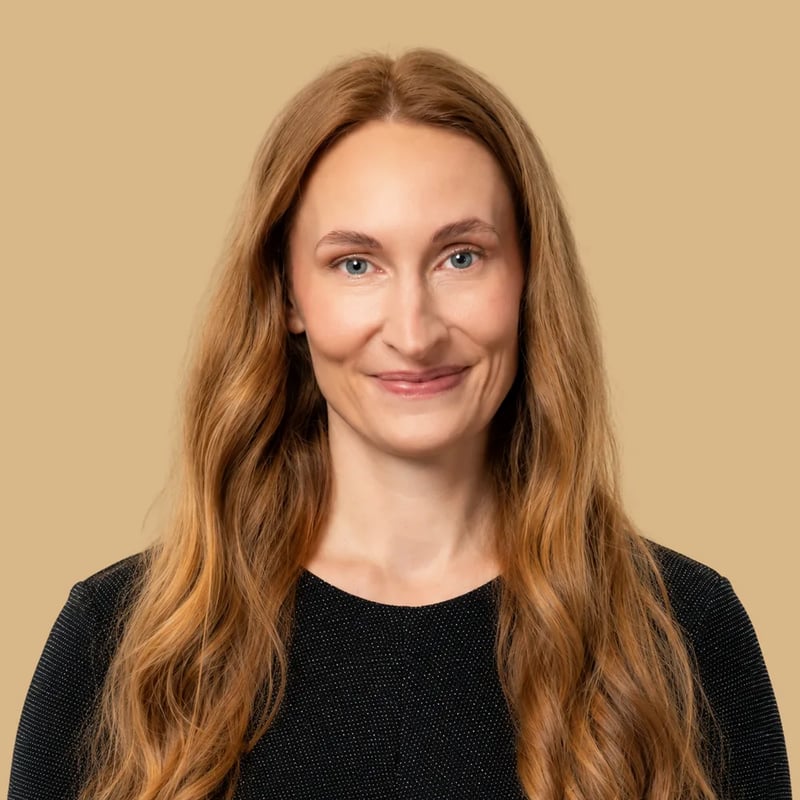
Neuron Award laureate for promising scientists
She took her doctorate at the University of California, Berkeley and worked at New York University (the Courant Institute), but in 2018 she moved to Prague and now researches and teaches at the Faculty of Mathematics and Physics of Charles University. At the Department of Numerical Mathematics she leads courses on numerical algebra for data science and high-performance computing. She is the author of a number of papers in SIAM journals and actively presents her research at international conferences.
High-performance computing has to be a compromise between speed and accuracy. That, at least, was long accepted as generally true in the world of numerical algorithms. Doc. Erin Claire Carson, Ph.D. did not accept it, and with a method called mixed precision she proved the opposite. A graduate of the University of California, Berkeley, she first worked in the United States, but in 2018 she moved to Prague, where she now researches and teaches at the Faculty of Mathematics and Physics of Charles University. In March 2025 she received the prestigious James H. Wilkinson Prize for her work, awarded only once every four years.
What did she receive the Neuron Award for?
She managed to crack a seemingly unsolvable problem, which has an impact across a wide spectrum of disciplines — from high-performance computing (HPC) through simulations to machine learning. Her presence at Charles University raises the prestige of Czech science and attracts young talent from abroad.
She proves how useful it is in science to question established assumptions rather than accept them automatically.
Can you recall a moment in your career when you said "eureka", "aha" or "wow"?
There have certainly been many moments in my career when I reached a new understanding — when I looked at something from a new perspective, or when different pieces of the puzzle came together in the right way. But for me, and I think for most scientists, these are usually not big, entirely revolutionary new ideas that arrive all at once; they are gradual advances that chip away at a larger part of a scientific problem. That is how most scientific progress is made.
Which five words or phrases describe you best?
Persistent, curious, impatient, optimistic, happy.
If you could have any superpower, what would it be and why?
I would like to be able to live without sleep and never be tired. There are so many things in life I want to do, learn, experience and achieve, and the day simply does not have enough hours.
Have you ever had a major personal or professional "disaster"? What did it give you and what did it take from you?
I am a perfectionist by nature and self-aware enough to know that I am very hard on myself and prone to catastrophic scenarios. There have been many occasions when I made mistakes that felt like the end of the world at the time — failing to answer a question from the audience after a talk, for instance, or saying something that sounded stupid to someone important, or completely botching an interview. With time and experience I have learned that other people forget these things quickly. When you make a mistake, keep your head up, carry on and do not dwell on your errors.
What are the basic ingredients of a recipe for good science?
Above all, honesty. Without honesty there is no science. By that I mean that we have to state clearly under which assumptions and conditions our results hold, state all the caveats clearly and not be afraid of negative results. The "publish or perish" culture of science and the metrics by which we are judged for academic promotion are, sadly, largely at odds with that approach.
Science and family — how do they complement each other in your life?
I have two small children and they are the most important thing in the world to me. At the same time, I do not think I would be a good mother if I did not have my own career and my own goals beyond my children. I actually think it does me good to "switch off" thinking about mathematics for part of the day and spend time with the children doing something completely different — something that engages a different part of the brain. I have often found that when I sit and try to solve a problem I am stuck on, I make no progress, but when I go and do something else and come back to it later, it suddenly makes far more sense.
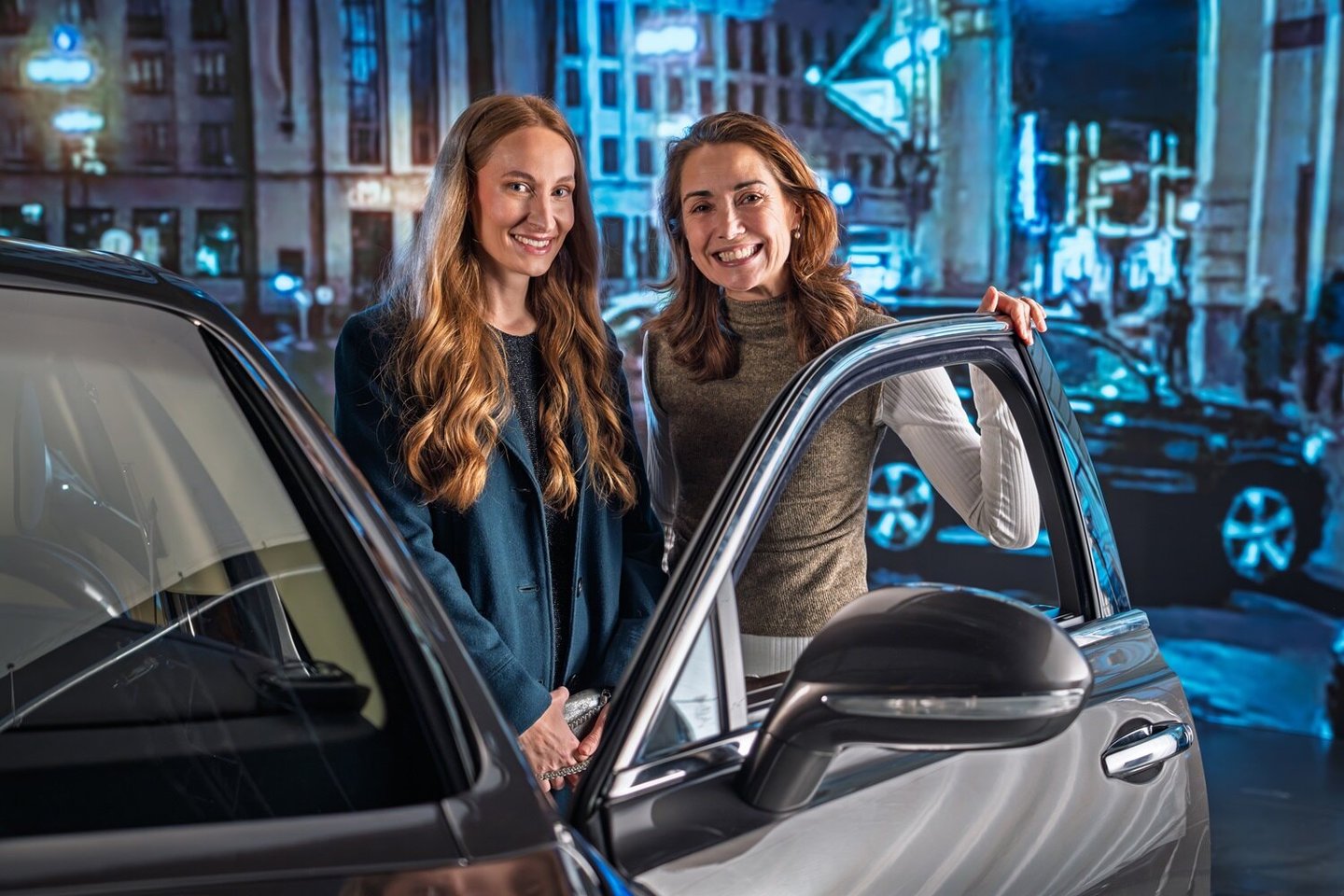
“I was a very naughty child who was always trying to find out how much I could get away with without getting into trouble. In a sense, my work today is about exactly the same thing.”