Laureate Chemistry
CasInvent Pharma
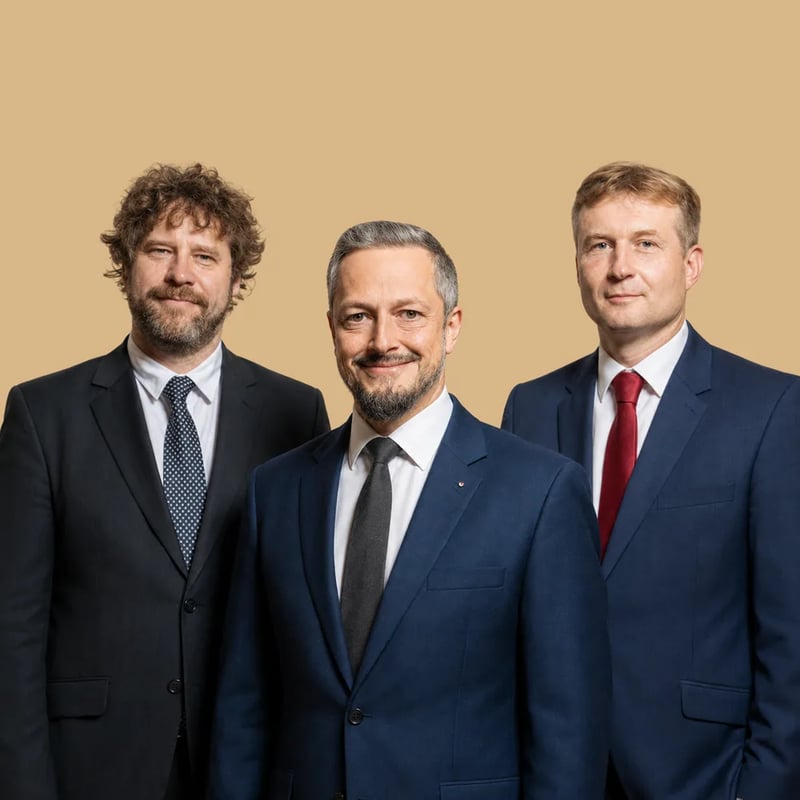
Neuron Award 2021 for Connecting Science and Business
How developing a leukaemia drug became a university spin-off
Two respected names of Czech science were brought together by a shared interest and years of practice in an innovative approach to developing substances for the treatment of leukaemia. The subject of their research is inhibitors of casein kinase 1 (CK1), and their business is the joint-stock company CasInvent Pharma. The third name is Masaryk University's businessman, who licenses their work for further development.
Vítězslav Bryja is a molecular biologist and geneticist, Kamil Paruch an organic chemist. Both studied in Brno, both spent time abroad and both decided that the Faculty of Science of Masaryk University would become their base. And finally Radoslav Trautmann, originally a chemist, who returned from business to academia and today leads a team at the university's Technology Transfer Centre.
Besides the effort to move CK1 research towards practice, all three men have one more thing in common: the scientific board of the Neuron Endowment Fund honoured them with the Neuron Award for an exceptional transfer from science into business. Their company shows the academic community and the public a path that leads to a successful connection of university, science and investment.
An unusual academic business
Years ago the story of the three men was still separate: in his laboratory Vítězslav Bryja studied the nature of intercellular communication and the role of CK1 in it, using substances originally intended to treat insomnia; Kamil Paruch worked for a multinational pharmaceutical company in the USA, where he took part in developing new compounds for cancer treatment. Radoslav Trautmann was only beginning to move the results of academic research into practice.
When Bryja's research met Paruch's, a new class of patentable CK1 inhibitors emerged with very attractive activity; and then came the need for a large financial investment in further research that would allow work on the compound all the way to clinical testing. Since that type of investment cannot be secured from the standard sources used for academic research, the whole project had to be turned into a commercial one so that the necessary funding could be raised from investors. Together with other colleagues, Trautmann began to look after the project from the business side (part of the company's shares are held today by the honoured team and by colleagues who take part in the unique project and without whom the research itself would not be possible).
Masaryk University, which has long worked on technology transfer, supported the opportunity, but wanted to keep the next steps under control and to own a business share in the company. The university entered the company with intellectual property; the money for further development was secured by the investment partner i&i Prague. In the autumn of 2020 the first chapter of the academic spin-off thus began.
The shareholders are already in talks about a sale
CK1 inhibitors are heterocyclic compounds developed for the treatment of cancer — tumours, lymphomas and leukaemias. CasInvent focuses on the last of these, on the market for drugs against chronic lymphocytic and acute myeloid leukaemia. It has taken its work to the preclinical phase; once that is complete it will move on to clinical testing with another investment partner, and finally, if development continues successfully, it is realistic to expect CasInvent to be sold to a large pharmaceutical company. That company should have the facilities and the money to complete the clinical phases and bring the new drug to market.
Czech universities have plenty of experience with licensing inventions; Masaryk University wanted a company of its own — and with it came processes it had to learn itself: building a legal entity with management, a budget and a plan with investment phases. And the belief that their invention in particular would interest a buyer. CasInvent has given itself five years for it and limited the company's life to the development of the inhibitors under study. The expected value of the company in the event of a successful sale is estimated at up to three billion crowns, and serious talks with new investors from abroad are already under way.
The market will confirm CasInvent Pharma's success in the future. For now it is clear that it can be an inspiration for other projects of science and business, and that it deserves the Neuron Award today.