International scientific panel
Bohdan Pomahač
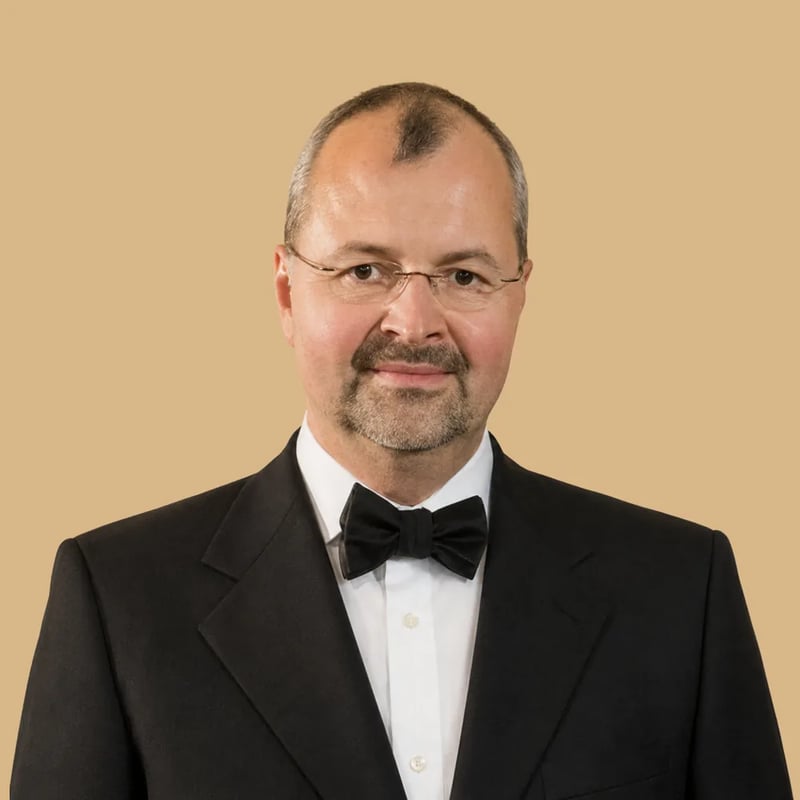
Member of the International Scientific council of Medicine
Bohdan Pomahac, MD, was born and raised in the Czech Republic where he graduated from Palacky University School of Medicine. He trained at Brigham and Women’s Hospital (BWH) in general surgery, and then went on to a fellowship in the Harvard Plastic Surgery Program. In 2004, Pomahac joined the staff at BWH as a plastic surgeon and associate director of the Burn Center. From January 2009 to September 2017, Pomahac has led the BWH Burn Center as medical director. In September 2017, he received the Roberta and Stephen R. Weiner Distinguished Chair in Surgery at BWH. Pomahac established the Plastic Surgery Transplantation Program at BWH, one of the world’s leading centers in face and vascularized composite tissue allotransplantation (VCA). As a pioneer in the field of VCA transplantation, Pomahac led the teams that performed the second partial face transplant and the first three full face transplant procedures in the U.S. In 2011, the team performed the first successful bilateral upper extremity transplantation in the Northeast.
Under Pomahac’s leadership, the BWH VCA transplant team has performed a number of additional face and hand transplants, and expanded research protocols to include lower extremity and abdominal wall transplantation. Pomahac’s research team is currently working on implementation of immunosuppression minimization strategies in clinical trials, development of technology to extend the viability of tissues, and other research topics related to VCA transplantation and plastic surgery. Pomahac’s clinical interests include facial reconstruction, reconstruction of oncologic defects including breast, esthetic surgery and microsurgery.
„Nine days after his face transplant, one patient asked me where to find a good Japanese restaurant in Boston, because he wanted to take his girlfriend out to dinner. I think that is wonderful,“ says the Czech plastic surgeon Bohdan Pomahač, who has already helped several people to a new face at an American hospital. He has now received the Neuron Prize for Contribution to Global Science in the field of medicine.
You left for the United States straight after graduating from medical school and worked there up to seventeen hours a day. What procedures were you allowed to perform in those first years?
I spent the first two years in a laboratory, where I operated only on animals. Demanding as the work was, it usually did not run to more than twelve hours a day. The hard test came only once my residency began and I started working in surgery. The system of postgraduate training is utterly uncompromising, but over time, and with growing responsibility for patients, a doctor learns a whole range of procedures. In the first year these are mostly simpler ones — gall bladders, appendices. The complexity then grows steadily, up to resecting several lobes of liver cancer, which was my largest operation in the third year of residency. When I happened to look at the end of my third year of general surgery at the number of procedures I had performed in vascular surgery alone, it would then have been enough in the Czech Republic for a second board certification. Given that a resident works eighty to a hundred and twenty hours a week, you can get a good deal done.
You worked for free at first. Did you never want to go back to the Czech Republic?
I had three thousand dollars, hard saved and hard earned. I was determined to stay until I either went broke or found work in my field and started moving forward.
You are known around the world for your unique face transplants. How did you come to these operations?
The face, and reconstructive aesthetic surgery in general, always fascinated me. What set me going was the first partial face transplant, performed by the French in 2005. I began putting together a whole programme so that we could do reconstructions here at our hospital as well.
What criteria does a donated face have to meet? I assume that besides the same blood group it has to come from a person of the same sex and a similar age?
Yes, you are right. Besides meeting all the requirements needed for a kidney transplant, for example, the sex has to be identical too. On top of that we try to match the recipient's skin colour and age as closely as possible.
When do you refuse to perform a face transplant?
We assess a prospective patient in great detail. We want to know what illnesses they have had, how psychologically settled they are, whether they hold unrealistic ideas about the outcome of the operation. The feelings of the surgical team after meeting the patient matter too. Nor should I forget the surgical criteria — whether the problem could be solved conventionally, for instance. To put it in numbers: of fifty patients, fifteen have provisionally passed through this filter, and of those, ten look like very good candidates for a transplant.
What are the most common reasons for the operation?
Injuries, burns and benign tumours, mostly.
As a young man you were a keen and successful chess player. How many moves ahead do you think during an operation?
As many as possible, and in as many combinations as possible. I am convinced chess helped me think strategically and anticipate — though it is equally possible I had those abilities anyway, which is why chess attracted me. In any case, in complex and often not entirely predictable operations you have to set up a hierarchy of priorities and take every step flexibly, so that in the end everything fits together. That flexibility, the ability to think on the move, is what not many people have.
Is there room for improvisation during an operation, or is the whole procedure planned out in detail beforehand?
Improvisation is unfortunately necessary however good the preparation. Nothing ever goes exactly to plan, which adds to the stress, but also to the excitement — and in the end to the satisfaction in the work.
In one interview you said the most important thing is connecting the vessels and arteries. How many are there in the face, and what diameter do they have?
There is a whole series of crucial steps, but two are probably the most critical. The first is taking the face from the donor, where there is room for mistakes that could make the face unusable. The second is connecting the arteries and veins themselves, so that an essentially dead face can come back to life. We try to find the largest vessels we can in order to reduce the risk of failure, so on one side the artery is roughly five to six millimetres in diameter, while on the other it is around two to three. The veins are of roughly similar diameter. The nerves are much smaller, though connecting them is not as stressful, because they cannot clot and the face will not die. How well we have joined the nerves shows only when their function returns, in roughly three to six months or longer.
What do you fear most after the operation?
I am often asked when we open the champagne to celebrate after an operation. My answer is: essentially never. During the operation we worry about the two critical steps I mentioned. Immediately afterwards the greatest risk is thrombosis — the blocking — of the connected vessels. In the following days there is a risk of infection and of tissue rejection. The period of uncertainty lasts two to three weeks, sometimes less, sometimes more, and our uncertainty falls gradually as the days pass. Probably my greatest joy is when a patient comes for a check-up after three or six months, smiles for the first time, and everything looks good.
What makes your operation unique compared with other teams in the world?
Taking the entire face from the donor is highly unique, and nobody in the world did it our way before us.
You once said that after an operation you sometimes feel you could have done something better. Is it possible to correct a transplanted face later?
Certainly, there is always something to improve. In the theatre, with the patient lying down, the face looks wonderful, absolutely normal. But during healing, while the patient still has no control over the muscles, the effect of gravity shows. The face sags a little and loses volume. It takes several months before the muscles start working. That is the best time to remove excess skin, for example. The corrections depend on the type of transplant. In people who receive only the soft parts of the face, the join with the original facial bones is harder to control. Patients in whom we had to transplant both jaws or larger parts of the facial bone usually do better.
Anyone who has ever broken a leg or an arm knows a bone takes about six weeks to knit. How do you get around that obstacle?
Transplanted bones and jaws are fixed with titanium plates directly into the facial skeleton, so they are functional immediately. A steak, or anything similarly tough, is something you do have to deny yourself for a while after the operation.
What do your patients talk and think about most once they have a new face?
If all goes well, they most often ask when they can go home. One patient felt his face right after the operation and later told me the only thing that occurred to him was: "This can't be possible! It's a miracle!"
Do they tell you how friends and the people around them react to their new face?
I often get spontaneous text messages. Nine days after his face transplant, one patient asked me where to find a good Japanese restaurant in Boston, because he wanted to take his girlfriend out to dinner. I think that is something absolutely wonderful.
How do patients come to terms with the fact that some of them, because of their injury, will never see their new face?
You mostly do not see your own face during the day either. What matters is that they can breathe through the nose, move their lips, articulate, eat, and also be able to express emotion. But looking like a human being is an important function of the face too.
How have surgical techniques advanced since your first partial face transplant in 2009? What has changed in those five years?
I think we are writing new pages in the history of medicine. I have managed to simplify the operations, so we can take a face from a donor in half the time we needed at the start. The suturing technique has moved on as well; we can see what we did not do quite perfectly before. It is all immensely exciting.
How is the first patient, whose whole face you transplanted in 2011, getting on?
Very well. He comes once or twice a year so that we can follow the course of the immune reaction to the new tissue. The immune response is suppressed with drugs so that the body does not reject the new face, but we have found that after a certain time a full dose of immunosuppressants is not entirely necessary and the amount of medication can be reduced. It looks as though the body gradually gets used to the graft. That is exactly the process we are studying.
So the immune system could one day be regulated to the point where the drugs are unnecessary?
Yes, that is what we are working on. There are certain ways of keeping immunity in a resting phase. In time the doses of immunosuppressants would be reduced continuously until they reached a minimum.
What future do you see for face and limb transplants?
I regard transplants as an interim solution — more a bridge to span the time until we find ways of creating a new face or limb biologically. Reprogramming the cells in a damaged part of the face or a limb, for instance, so that the missing parts grow back. Theoretically it is possible, but in practice growing a limb takes fifteen years.
Are stem cells not the answer? They can turn into any cell in the human body, so a liver, a kidney or a heart could be created.
This kind of information raises enormous hopes in people, but it does not yet mean we can control cell growth perfectly enough to grow a new hand, for example. That moment is still a long way off. Yes, in a test tube stem cells show signs of turning into new tissue, but nobody has yet made the same process happen inside the body, with a new hand connecting to the circulation and the nervous system. I think the influence of stem cells on regenerating limbs or faces will be minimal. New techniques based on reprogramming tissue are more promising.
I read that you have intended to transplant a leg for two years now. How far have your preparations for that operation come?
Together with my team I have seen around fifty candidates, but many had no clear idea of what they actually wanted. One patient is aware of the possible risks of the operation and is sufficiently motivated, but so far we have not found the ideal patient.
What do they have to meet?
They must have most of the thigh muscles preserved, and be physically fit to a degree, so as to manage a fairly demanding rehabilitation lasting several months. They have to be able to grasp everything the operation entails. People are particularly worried about the effect of immunosuppressive drugs. They also have to sign up to spending three to six months in a rehabilitation institute. And we cannot guarantee patients full function of the leg. They will probably not run; at best they will start walking on crutches or with a stick after a year of training. I admire the patients who agree to the operation, because it always takes a great deal of courage.
Will bioprostheses not be your competition?
A colleague carried out a study among people without limbs and found that roughly half of those asked were interested in a transplant. Interest rose by another ten to fifteen per cent if the problem of suppressing the body's immune response to the new tissue could be solved. As for bioprostheses, they are functional, but satisfaction with them is not that high. People appreciate being able to walk, but the prostheses do not work in the long term; they also press permanently on the stump and using them hurts. With prostheses on both sides, situations arise that are hard to deal with — needing to go to the toilet at night, for instance. So in general there is no prosthesis that suits everyone. To my mind it is a poor substitute for a living leg.
How much has the prestige of your workplace — Brigham and Women's Hospital — risen since your first operation? Do more people come to you?
Brigham was a famous hospital long before my successes. Several books have even been published about the history of surgery at Brigham, from its founding and the beginnings of neurosurgery as a field through the first heart valve operations and the first transplant of a human organ. Even so, our successes probably helped BWH move from thirteenth to eighth place among the best hospitals in the USA. And I have certainly become more well known. Offers of interesting research collaborations come in, for example. Unfortunately there is envy too, and envy knows no borders.
What are your goals?
I do not want to talk about them; you never know what fate will bring. What interests me most is immunology and the regulation of immunity. Understanding these processes will bring an enormous promise for treating autoimmune diseases — multiple sclerosis, type 1 diabetes, rheumatoid arthritis and many others. That could matter greatly for a lot of patients. But as I say, things develop, and so I do not like to speak publicly about my long-term goals.
Text: Josef Matyáš
Photo: Brigham and Women’s Hospital
They wrote about him:
- Potlačení imunity nebo výroba lidských tkání, popisuje budoucnost chirurgie Bohdan Pomahač (ČRo, 5. 12. 2016)
- Ostravák Pomahač odjel stěhovat obličeje až do Spojených států (Lidovky.cz, 20. 4. 2016)
- Transplantace tváře. A co přijde pak? (Vesmír, 10. 12. 2015)
- Pomahač: Transplantace obličeje? Nejunikátnější je jeho odběr, umíme to jen dva (DVTV, 20. 9. 2015)
- Bohdan Pomahač, tak trochu jiná celebrita (Novinky.cz, 30. 1. 2015)
- Věřím, že transplantovat části těla bude snazší, říká chirurg Pomahač (Hospodářské noviny, 14. 12. 2014)
- Bohdan Pomahač: Chtěli bychom být schopni restaurovat celé lidské tělo (Blesk pro ženy, 12. 12 .2014)
- Chirurg Pomahač: Jde nám o schopnost restaurovat celé tělo (ČT24, 10. 12. 2014)
- Transplantace obličeje je jako tisíc jiných operací, říká Bohdan Pomahač (ČRo Dvojka, 10. 12. 2014)
- Miliardáři ocení špičkové vědce, sošky převezmou chirurg Pomahač nebo matematik z nádrže Orlík (Hospodářské noviny, 10. 12. 2014)
- Chirurg Pomahač by rád dělal rekonstrukce celého těla (Novinky.cz, 10. 12. 2014)
- Transplantace nohou je připravena, čekáme na pacienta, říká Pomahač (iDnes, 10. 12. 2014)
- Bohdan Pomahač v Čechách: Chceme opravovat celé lidské tělo! (Blesk, 10. 12. 2014)