Well-travelled proteins — associate professor Bryja's team has published Neuron research in Nature Communications
20 May 2019
Bad communication between people can do a lot of damage, but when cells in our bodies misunderstand each other, real trouble can be brewing. In the case of Wnt proteins, communication noise can even set off a carcinogenic process. Associate professor Vítězslav Bryja is an expert on the communication of Wnt proteins and, hopefully soon, an interpreter of the language in which they speak to other cells and thus cause leukaemia.
Thanks to Neuron's support — a million-crown Neuron Impuls grant — he and his group were able to verify that these proteins are not only very communicative but also quite well travelled: his discovery shows that they are equipped to "ride" around the whole body and "whisper" to cells at the completely opposite end of our organism. He is now publishing this discovery in the prestigious journal Nature Communications.
Your article recently appeared in the prestigious journal Nature Communications. What conclusions are you publishing there?
We managed to demonstrate that one particular molecule — Wnt5a — can bind to what are called lipoprotein particles (which we know well from measuring blood cholesterol, for instance) and in this way spread through the cerebrospinal fluid during the development of the brain.
Why are these conclusions important?
Until now nobody had demonstrated that this way of transporting Wnt molecules is a physiologically relevant mechanism in mammals that regulates biological processes such as cell division or migration. It had been thought that in mammals Wnt proteins can only be passed between the nearest neighbours, that is, over distances of up to 1 mm.
How did the million-crown Neuron Impuls grant contribute to these conclusions?
Thanks to the funds from the Neuron Endowment Fund we were able to identify a new way of transporting bioactive molecules from the Wnt family. We had no grant funding for this interesting project, and so support in the form of a Neuron Impuls grant was fundamental. We began to look at bioactive substances from the Wnt family as hormones. Those can act over great distances in tissues because they are carried by bodily fluids. The discovery may have far-reaching consequences — not only for understanding the mechanisms of embryonic development but also for understanding the mechanisms of the emergence and development of diseases such as cancer.
Research into Wnt substances is part of your wider research, which focuses on leukaemia. What is your aim?
In the wider context, the main aim of the research in our whole laboratory is to understand how molecules of the Wnt family work — how they are transported in the body, how they give signals to individual cells and how cells interpret their signals. We then try to apply this knowledge to situations where an error occurs in this communication system and a disease such as leukaemia arises.
Why did you decide to study leukaemia, and what drives you forward as a scientist?
We found that leukaemia, specifically chronic lymphocytic leukaemia (CLL), which is the most common type in the Czech Republic, shows significant deviations in the functioning of our Wnt molecules, and that these deviations are behind the development of this serious disease. It seems that CLL cells are extremely sensitive to Wnt signals thanks to changes in their "receiving" apparatus. As a result they react even to a level of signal to which they ought to remain deaf. And what drives us forward is our own results, combined with curiosity and the desire to help patients one day.
How specifically can your research have an impact on treating leukaemia?
I believe that the ability to prevent cells from non-physiological communication via Wnt proteins could one day contribute to treatment. For instance, targeted suppression of the reception of the Wnt signal in cells by inhibiting the enzyme casein kinase 1 is proving as effective in a mouse model of leukaemia as current treatments using the substance ibrutinib. And in combination we achieve an even better therapeutic result.
Photo source: http://www.sci.muni.cz/bryjalab
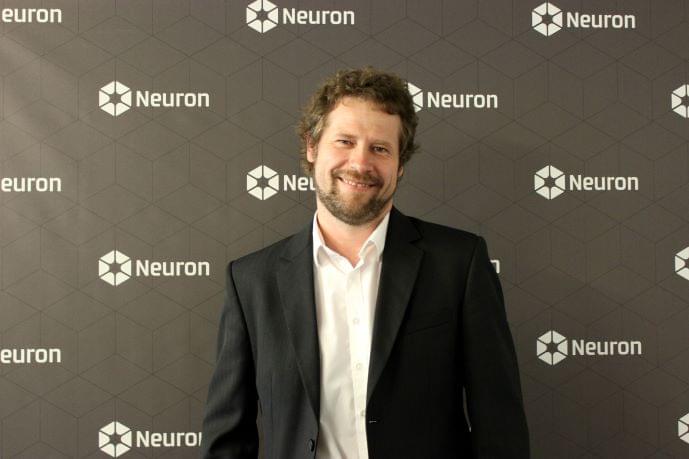
Vítězslav Bryja
Associate professor Bryja (b. 1977) obtained his master's degree in molecular biology and genetics in 2000 at Masaryk University in Brno. He then obtained his Ph.D. at the First Faculty of Medicine of Charles University in Prague. He habilitated as an associate professor at Masaryk University. After graduating from his alma mater he worked for two years at the Institute of Animal Physiology and Genetics of the Czech Academy of Sciences in Liběchov, and for the same length of time at the Centre for Cell Therapy and Tissue Repair of Charles University. As a postdoctoral researcher he worked in the Laboratory of Molecular Neurobiology at the Karolinska Institute in Stockholm. Since 2014 he has worked at the Institute of Experimental Biology of the Faculty of Science of Masaryk University.