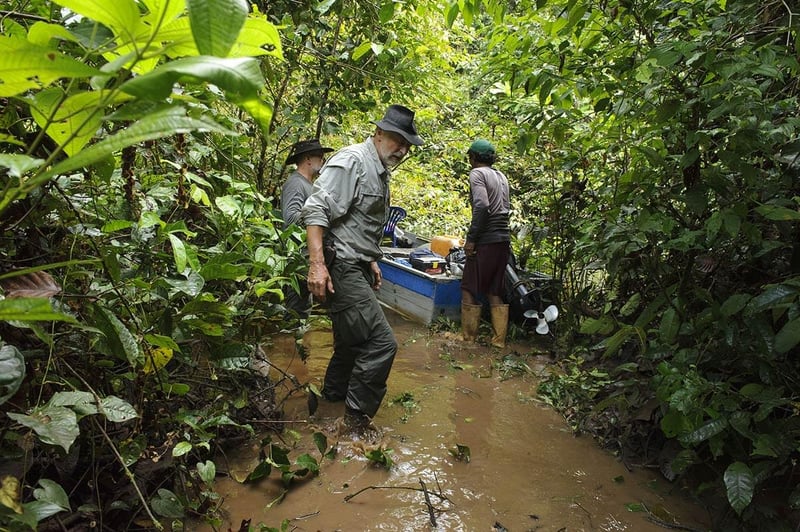
"A successful Neuron Expedition: Vojtěch Kubelka has found the legendary wader species, the imperial snipe!"
5 January 2018
The mysterious wader species the imperial snipe was considered extinct for more than a century. Almost nothing is known about this species' way of life. The aim of the expedition of the ornithologist Vojtěch Kubelka was to investigate the presumed territory of the imperial snipe (Gallinago imperialis) in the Peruvian Andes, to verify the records that exist so far and, where possible, to map new localities where it occurs. He spent 40 days in Peru with his team, from 6 November to 15 December 2017. And the result?
The mysterious wader species the imperial snipe was considered extinct for more than a century. Almost nothing is known about this species' way of life. The aim of the expedition of the ornithologist Vojtěch Kubelka was to investigate the presumed territory of the imperial snipe (Gallinago imperialis) in the Peruvian Andes, to verify the records that exist so far and, where possible, to map new localities where it occurs. He spent 40 days in Peru with his team, from 6 November to 15 December 2017. And the result?
Our expedition was a success!
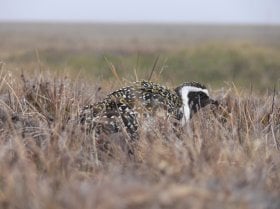
We discovered the imperial snipe in the Cuzco region near the village of Pacaypata. The individual, hidden in the middle of impenetrable forest, did not react to the recording, however, and we did not manage to catch it. At least we could follow its vocal activity. We managed to catch an Andean snipe (Gallinago jamesoni), which is also a little-studied species of mountain snipe. We followed one bird for four days using radio telemetry and were surprised to find that a snipe needs only a small territory of a few dozen square metres on a waterlogged Andean slope to live.
The truth is that we monitored dozens of new places in detail within these regions where the imperial snipe might occur, including verifying five localities from which its occurrence had been reported. Apart from one locality (Pacaypata itself), however, all further monitoring was negative. Unfortunately, at a number of these subsequently visited places from which a recent occurrence of the imperial snipe had been reported, the natural conditions did not suit the requirements of the imperial snipe at all. That leads us to believe that observers at these places mistakenly
took the more common Andean snipe for the imperial snipe. So it looks as if the imperial snipe will be even rarer in southern Peru than it appeared from several reports over the last decade.
Vojtěch Kubelka, Neuron Expedition 2017