Radan Haluzík's expedition continued in Ghana. Read his travel notes
14 February 2018
After journeys to Kosovo and Lebanon, our series of Neuron Expeditions continued with further research into the homes of the "rich poor", this time in Ghana.
The capital city Accra has burgeoning suburbs that expand in a massive belt along the coast until they merge with the distant suburbs of neighbouring cities. Luxurious gated communities with swimming pools for the very richest are appearing, as are developers' projects of identical villas in rows for the emerging middle class, and the ramshackle suburban settlements and slums of the poorest…
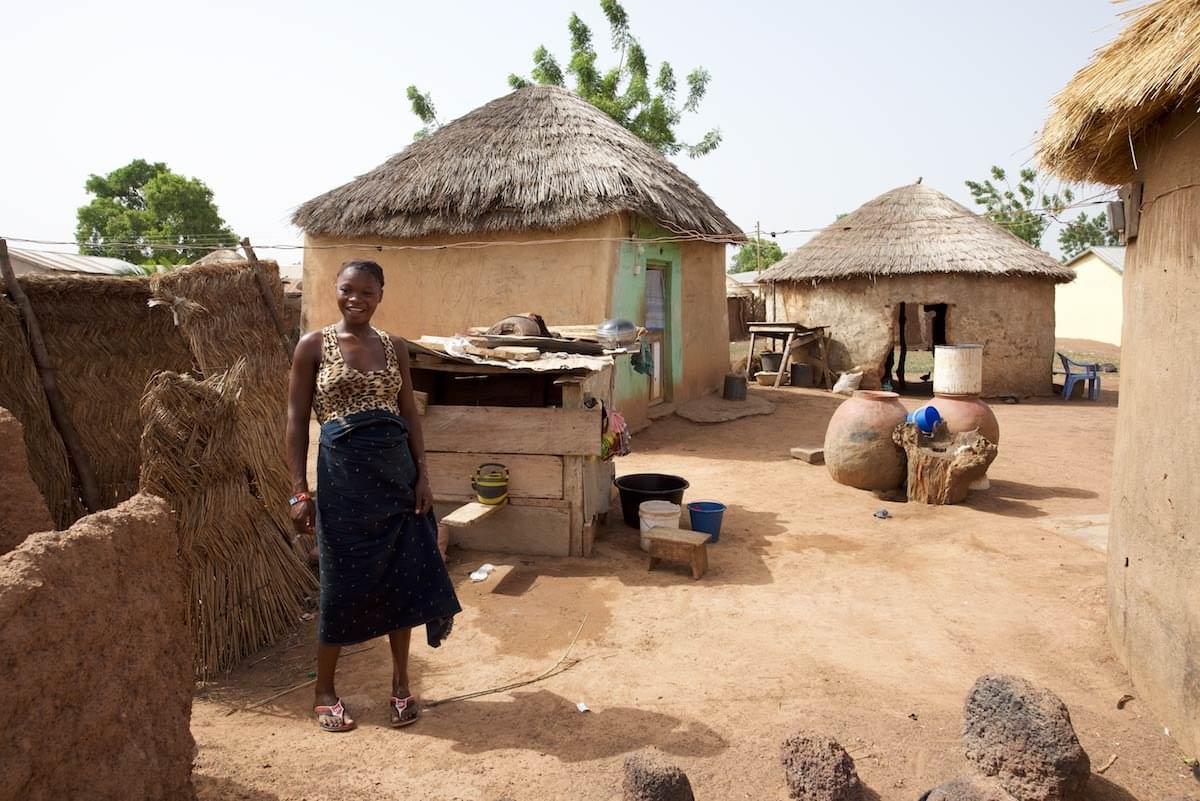
My attention is turned to the burgeoning metropolis of northern Ghana — Tamale. Although the city lies far to the north in the middle of dry wilderness, with more than 360,000 inhabitants it is the fastest growing city in the whole of West Africa. It does have an international football stadium for twenty thousand spectators (built for the 2008 African Cup of Nations), an international airport (built for the annual pilgrimages to Mecca) and a number of secondary schools and universities — but no real factory and no external export. In the 1990s asphalt four-lane roads connected the commercial centre and several markets at this great African crossroads with the surrounding mud-brick villages. In a number of places, however, there is no water (it is brought in tankers, or women carry it daily on their heads from muddy ponds) and in some places, until recently, no electricity either. The expanding city is made up of hot red savanna more or less densely dotted with houses, small shops, "production areas" and warehouses, small churches and mosques, but also fields, pastures and baobabs. Among them — because petrol is expensive for local people — it is not cars and minibuses, as elsewhere in Ghana, that rush about, but rather motor-rickshaws, bicycles and motorbikes, along with flocks of guinea fowl and herds of goats. Politics is dominated, besides the governor appointed directly by the president, by two great city chiefs and their courts, as well as by a number of smaller local chiefs of villages gradually being swallowed up by the city.
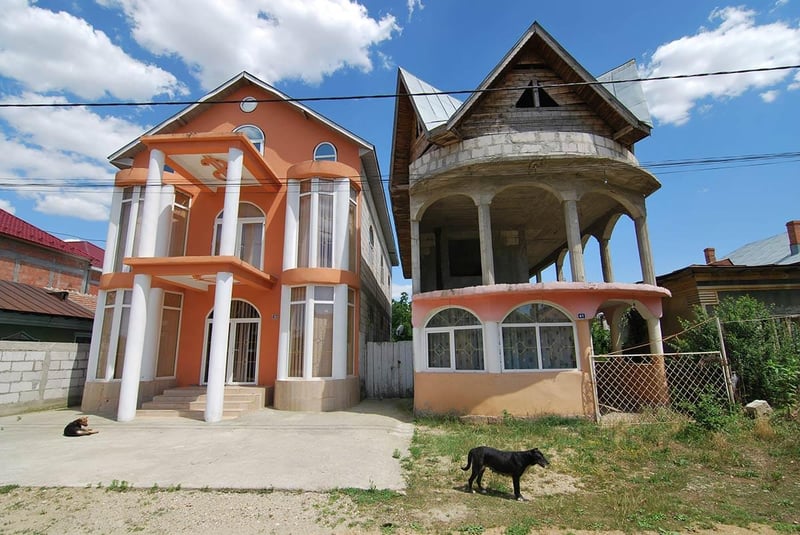
Getting hold of money in Tamale is not easy. Even so, alongside modest houses with kitchens right in the yard, or even traditional round huts with grass roofs, villas are springing up everywhere that take your breath away. The welcoming cheer of their pastel colours, verandas with imperial columns and ornaments contrasts with walls topped by barbed or even electric wire, massive gates as if into a fortress, and guard huts (which are empty, because the city is entirely safe). They are built by traders in globalised goods; by people working abroad or in the richer southern part of Ghana who want to return for their retirement. They are built by elites from surrounding regions who fled to Tamale from the local ethnic conflicts of the 1990s, but also by mistresses to whom foreign employees of Western firms give houses as "compensation". They are built by all those who see a house as the only investment that neither time nor inflation can destroy…
But they are also built by those who cross borders and laws! Even in Tamale, which by Ghanaian standards is welcoming, easy-going and God-fearing, indignant rumours circulate about luxury houses and swimming pools growing out of (political) corruption, the sale of marijuana and, above all, out of the computer fraud and electronic crime among young people that has lately become so popular in Ghana. White cars, garish clothes and endless boisterous marijuana parties in the new villas. Residents are indignant as citizens at the breaking of rules and the law, but also morally outraged at ostentatious waste and extravagance that is unbecoming for a proper Muslim or Christian… "What kind of hedonistic lifestyle is this?!"
Radan Haluzík