Neuron Expedition to the tropical glaciers 2018
14 June 2018
Tropical glaciers will probably disappear within a few decades, and with them the key information about ecology and climate that has been stored in them for thousands of years. Although our generation is the last that can study them, we do not know their ecology even in outline. The winning project of the 2018 Neuron Expedition will close this gap in our knowledge.
Continental glaciers are key to the Earth's climate, but as an environment for life they were considered hostile. Only the arrival of nanotechnology revealed something of their surprising richness. The current boom in glacial ecology is, however, concentrated in the polar regions. No attention is paid to tropical glaciers, even though they have marked peculiarities and are the fastest disappearing biotopes on the planet. Insufficient interdisciplinary connection and little focus on comparison between regions can also be seen as a fundamental problem. It is therefore difficult to decide whether the processes and ecosystems of different glaciers are unique, or whether it is rather a global system of which tropical glaciers are merely the most distant oases.
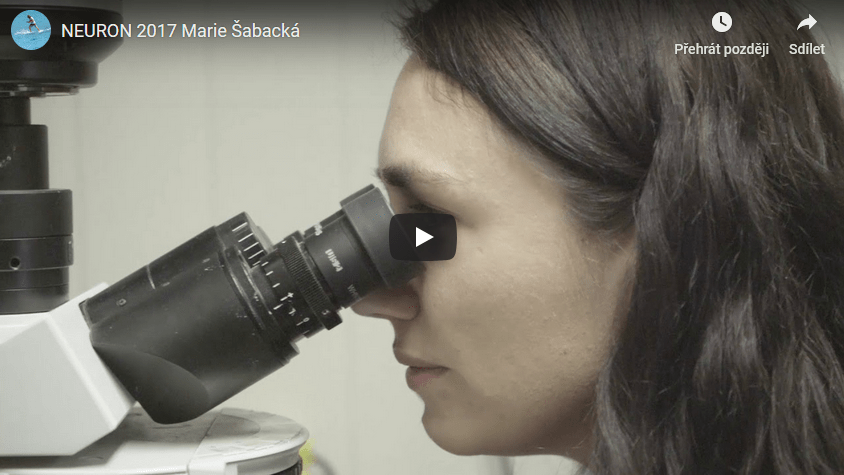
The principal investigator of the project and head of the research team is Marie Šabacká, a polar ecologist from the University of South Bohemia in České Budějovice, where she works at the Centre for Polar Ecology at the Faculty of Science.
The aim of the expedition
The aim of the expedition is to describe the as yet unknown diversity and productivity of the African glaciers of the Rwenzori mountains in Uganda. By comparison with temperate (Norway, the Alps) and polar glaciers (Svalbard) we will establish whether tropical glaciers are merely the southernmost outposts of extensive polar ecosystems or whether they host entirely unique and isolated communities.
Why is this research scientifically important?
Using a unique combination of genomic analyses with measurements of ecosystem production and nutrient cycling, the research expedition will create an unprecedentedly comprehensive picture of the ecology of tropical glaciers. What is more, it will be the first research team to place this information in a global context by comparison with the communities of glaciers of the temperate (the Alps, Norway) and polar (Svalbard) zones. The information obtained will thus not only be saved from loss but will also serve to identify the causes and consequences of the retreat of tropical glaciers, both for the local population and for global biodiversity
What they wrote about the Neuron Expedition:
With polar bears at my back — Marie Šabacká (Pátek LN, p. 6 — 12 July 2019)
Tropical glaciers hide information found nowhere else on Earth. In a few years they will be gone — Marie Šabacká (Seznam Zprávy — Výzva, 23 May 2019)
"If not now, when." A Czech biologist is setting off on an expedition to study rapidly melting tropical glaciers — Marie Šabacká (irozhlas.cz — 15 May 2019)
Saving large African animals and glaciers — Marie Šabacká, Tomáš Jůnek (ČT — Studio 6, 14 May 2019)
A Czech scientist is conquering glaciers at the pole and in Africa — Marie Šabacká (ČT — Události komentáře — 13 May 2019)
Czechs will present their own world discoveries. From glaciers to primates — Marie Šabacká (novinky.cz — 10 May 2019)
The troubles of tropical glaciers — Marie Šabacká (iprima.cz — 30 April 2019)
Through the ice I can see into the past (Magazín Víkend Dnes — 29 December 2018)
Melting tropical glaciers are like the burned library of Alexandria, says the scientist Šabacká (aktualne.cz, 31 March 2018)
A Czech scientist will investigate endangered African glaciers (Hospodářské noviny, 22 March 2018)
Polar scientist Šabacká: I like leaving my comfort behind (Reflex, 13 January 2018)