Czech scientists from Expedition Neuron are on the trail of longevity
Scientists from the Faculty of Science in Ostrava and the Institute of Biophysics of the Czech Academy of Sciences in Brno have found a possible key to the Greenland shark's longevity in its RNA. According to the new findings, the shark's molecular processes make use of an enzyme typical of resistant tumour cells. This fish, which can live for more than 400 years, became the focus of the Neuron Expedition In Search of the Longevity of the Greenland Shark, which travelled to Iceland in 2022 to collect samples and discover the key to an impressive evolutionary twist.
The Neuron Expedition managed to obtain samples of muscle, liver and notochord, from which the scientists isolated RNA molecules as well as DNA. After isolating the nucleic acids and successfully sequencing them, they found a possible trace of longevity in the shark's RNA — more precisely, processes that are typical of tumour cells. The shark has probably managed to redirect them in the course of evolution and use them for its extremely long lifespan. The discovery may be fundamentally connected with the extreme length of the shark's life and its resistance to age-related diseases.
"To give an idea of how much data we obtained: in total more than 63 million bases were sequenced in more than 150,000 RNA transcripts. A great many of these transcripts have their homologues (that is, molecules with a similar sequence and function) in the human genome as well. But what surprised us greatly was the unexpectedly large amount of a transposable element that was present in the active transcriptome of both muscle and liver tissue! This result is highly unusual," explains the leader of the Neuron Expedition, the biologist Václav Brázda of the Institute of Biophysics of the Czech Academy of Sciences.
The samples were of sufficient quality, and so the scientists subsequently obtained very valuable information about the active part of the Greenland shark's genome.
Evolutionary redirection of tumour cells as the key to extreme longevity?
"In short, we found that the long-lived Greenland shark produces increased amounts of reverse transcriptase encoded by the LINE-1 gene. Reverse transcriptase is an enzyme active, for example, in tumour cells, where it is partly responsible for their immortality. In our view it is possible that the Greenland shark has in a sense adopted some features of the molecular processes typical of tumour cells and has at the same time been able to redirect them in the course of evolution and use them to achieve extreme longevity," suggests Martin Bartas of the Department of Biology and Ecology of the Faculty of Science of the University of Ostrava on behalf of the Ostrava team.
But how is it even possible for the Greenland shark to live to a venerable 400 years? "Very little is known about the biology of this unique animal, so it is not even known whether female sharks also have a longer average lifespan than males, as in humans. Among large marine organisms, systematic research in Iceland is devoted only to whales; unfortunately for the shark, it is on the margins of interest even where it occurs," explains Václav Brázda, adding: "Its slow metabolism and life in cold water certainly play an important role, but then again many short-lived organisms live in the same environment, including three other shark species whose lifespan is nothing exceptional. Ideally we would be able to obtain samples of all four species and identify the differences between their genetic information."
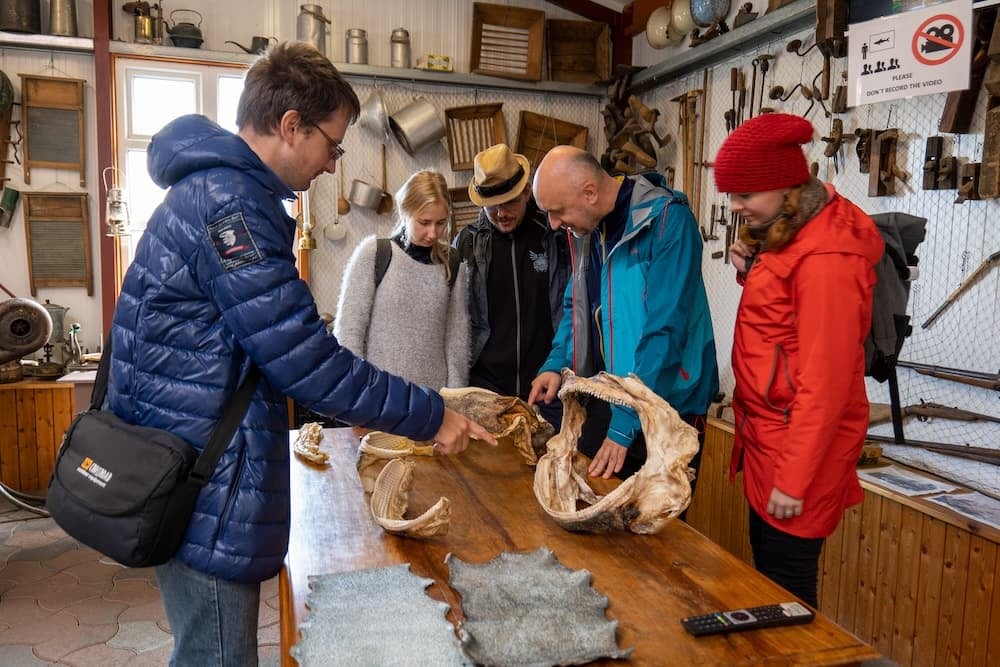
The Neuron Expedition raised the profile of the subject and produced original results
The variability of the genome of sharks, of which there are about 400 species, is in fact far greater than, for example, the variability of the mammalian genome. "Even though at first sight they seem similar to us, genetically they can be more diverse than they appear, thanks to a much longer evolutionary history," Václav Brázda points out.
Thanks to the support of the Neuron Foundation, the scientists established contacts and relationships with institutions in Iceland with which they will continue to cooperate.
"I think that before our expedition hardly anyone even knew that the Greenland shark is such a champion and expert in longevity. Thanks to the support of the Neuron Foundation we not only managed to raise the profile of this natural area, but we also obtained entirely original results, which will certainly form the basis for further research into this remarkable but so far little-studied animal," says Václav Brázda, closing another chapter of the expedition.