Czech Egyptologists succeed where others do not expect it
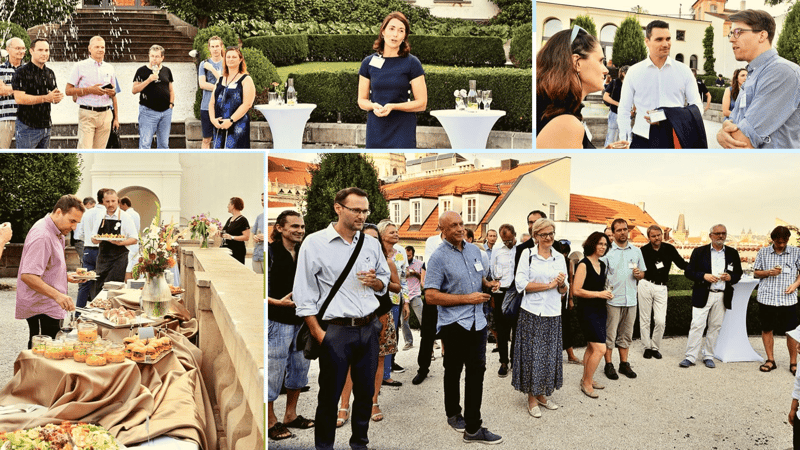
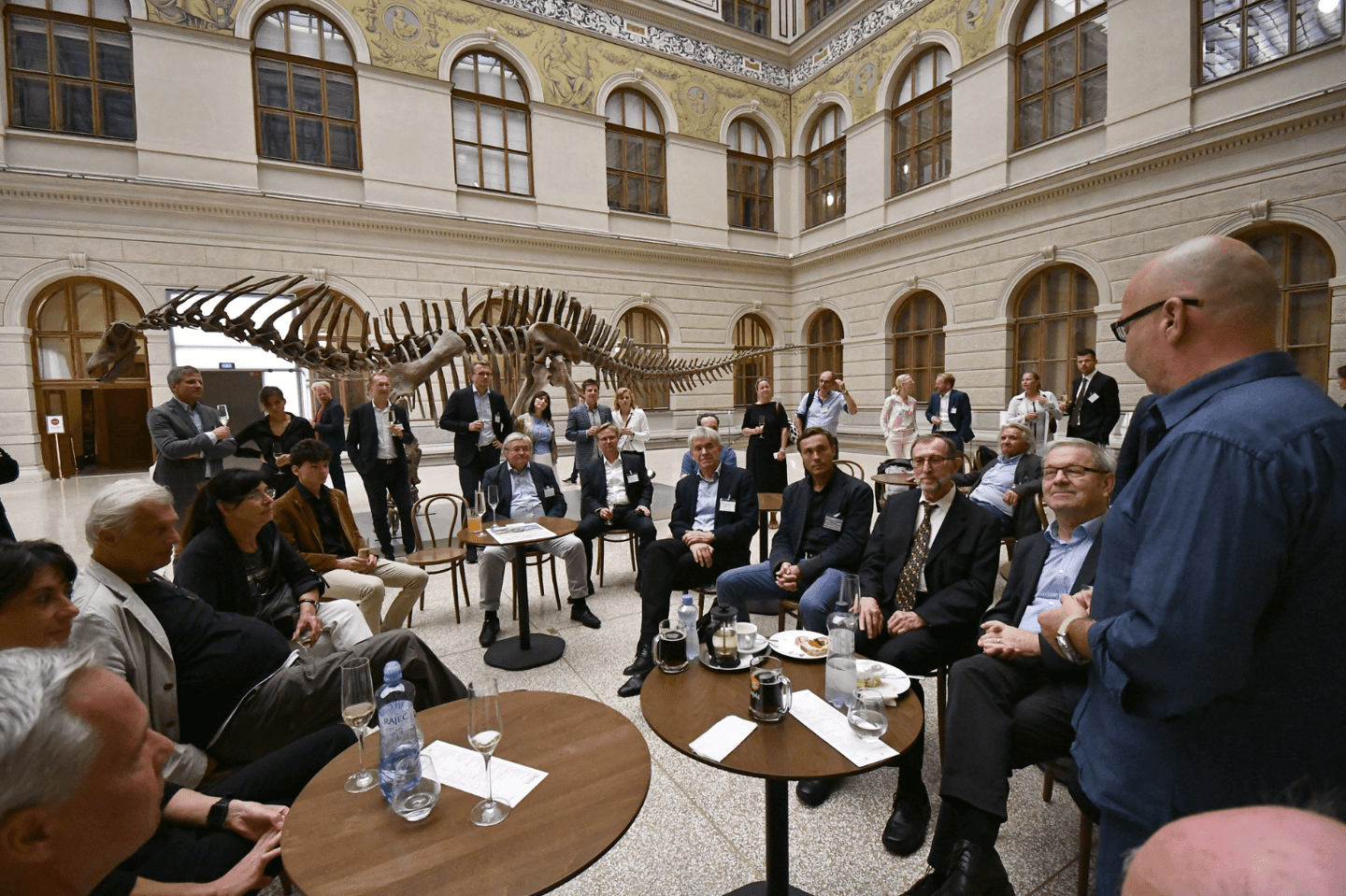
Focus with us on Czech Egyptology at another Neuron Club, held on 16 September 2019 at the National Museum.
What is taken for granted about Czech Egyptology is that nothing about it can be taken for granted
The Czechoslovak Institute of Egyptology was founded by Professor František Lexa in 1958. After his death in 1960 the leadership of the Institute was taken over by Zbyněk Žába. It was at this time that Professor Verner also began to work at the Institute. The promising development of Czech Egyptology was halted by the Soviet occupation — Professor Žába's team broke up and all the Egyptologists either left the country or were banned from working. In 1970 Jaroslav Černý died — the guarantor of Czechoslovak Egyptology abroad — and in 1971 Professor Žába died. Even though Černý's valuable Egyptological library was eventually moved to Prague, the normalisation authorities shut down the Czechoslovak Institute of Egyptology in 1971.
In 1973 a new dean took over at the Faculty of Arts of Charles University — Václav Ráb, a former associate professor in the department of Marxist philosophy. Surprisingly, he proved to be an enlightened man, willing to accept that it was not possible to withdraw unilaterally from Czechoslovak Egyptology's international commitments in Egypt — Professor Žába had obtained a concession from the Egyptians for excavations at Abusir. The dean travelled to Egypt with Professor Verner to see for himself and, on his return, declared that it would be a mistake to abandon the research. It was therefore possible to continue the excavations in Egypt gradually and with minimal resources.
An important role was played by the sympathy of Egyptian Egyptologists for their Czech colleagues, probably connected with the Prague Spring, the events of the summer of 1968 and the self-immolation of Jan Palach. Thanks to a combination of circumstances, a new concession was obtained from the Egyptians for the whole of the as yet unexplored Abusir, where only a German expedition had been working. This anchored Czech archaeological research not only in the middle of the pyramid fields but also on the international stage.
The Institute had to be rebuilt from scratch, its team included. That was achieved, and ever since Abusir has regularly rewarded Czech Egyptologists with significant archaeological discoveries.
Great credit for the success of Czechoslovak and Czech Egyptology belongs to its founders, Professors Lexa and Žába, who, as philologists, brought into Czech Egyptology not only archaeological fieldwork but also an emphasis on working with sources and information. The Institute's current leadership builds on the founders' success — it is headed by Professor Miroslav Bárta, who leads the institution and also many of the successful field projects.
Egyptology as a strategic science
"Archaeology is also something that lets us bring back to life civilisations that have long ceased to exist and that can tell us about possible parallels." Egyptology is not only about fieldwork; it opens up the possibility of studying a long-lasting civilisation in terms of time series: Egypt lasted more than two thousand years, reached its peak, had complexity, experienced collapse — and that was repeated roughly four times. Thanks to this we can examine the wholeness of these processes in time series, look for their causes and observe their consequences. It also allows us to study the internal dynamics of a society — how the social contract functions, how resources are used and how available they are, and so on. That makes Egyptology a strategic discipline relevant to the present. Comparing time series from other civilisations makes it possible to distil the laws by which civilisations work — laws that appear to hold without exception, however much civilisations differ in their complexity.
"Czech Egyptology does not follow trends, it creates them."
Civilisation and belief
The Egyptians were deeply convinced that their world and its order had been given to them by the gods at the creation of the world, and that Egypt would exist for as long as that order prevailed. At the head of that order stood the ruler, himself considered a god. He was the guarantor against the forces of evil and chaos. The idea of Egyptian statehood and the awareness of their own exceptional status were remarkable and kept the Egyptian state running.
If a society does not lose vertical thinking, if it is aware that there is something that transcends it, then it has a chance of surviving an economic problem. When the Gulf Stream shut down in the past, civilisation was on the brink of extinction. In eastern Turkey there were communities that, instead of securing the resources to survive, preferred to build megalomaniac structures and religious buildings… "A society that has a vision, that believes in something that profoundly transcends it, is the alpha and omega of civilisation."
What phase of civilisation are we in now?
Our complexity is growing. Complexity requires energy, but energy sources are ever more limited. From the study of civilisations we have an insight into what happens to complexity when the energy runs out. Development works according to the theory of punctuated equilibria: evolution does not happen gradually over millions of years but proceeds in leaps. The factors that stand at the beginning of a rise are the ones that later cause a crisis and lead a society to its end. It is therefore essential to identify them. "Grasping and understanding context is our society's greatest weakness."
Collapse as a new beginning?
Collapse is not a permanent end but a natural phenomenon. We have to find the strength within society to resuscitate the social contract, to adapt to collapse and rise again. When the Western Roman Empire was falling, we know from contemporary records that its inhabitants welcomed the barbarians, because they relieved them of the Empire's yoke… the original Roman civilisation acquired a different language and different outward forms — it was transformed into another culture. The people remained, the civilisation changed its features, a new one developed. Technologies help us cope with changes in the development of civilisations, but everything has its limits (consider desalination, which produces drinking water but salinises the soil). People cannot overpower nature; they only devise a temporary solution.
"The best thing human beings were given at birth is the need and the desire to keep looking for new paths. And that is what science is about."