10 of the best Czech scientists received the 2018 Neuron Awards
3 December 2018
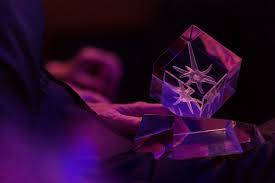
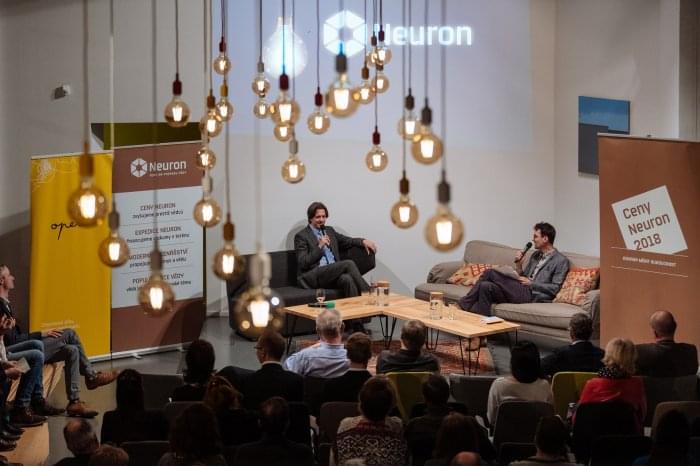
The Neuron Endowment Fund has handed out the prestigious Neuron Awards for science. Ten awards were presented in three categories in total — besides lifelong contribution to science, three significant scientific discoveries and six young scientific talents were honoured.
This year the fund's international scientific board took part in selecting the laureates, which guaranteed the world-class expertise of those honoured. In total the laureates shared a record CZK 8 million, coming exclusively from the private resources of the patrons of the Neuron Endowment Fund. A further million crowns supported the Neuron Expedition. The awards were chosen in seven scientific disciplines — mathematics, physics, chemistry, biology, medicine, social sciences and computer science.
The 2018 Neuron Award for lifelong contribution to science
In the field of biology
Jan Klein is considered one of the founders of modern world immunogenetics and a successor to J. G. Mendel. Thanks to his lifelong research we are able to understand better the immune reactions of the organism that are responsible for complications in organ transplants. His genetic characterisation of these mechanisms is a discovery of world significance.
The 2018 Neuron Award for a significant scientific discovery
In the field of physics
Tomáš Jungwirth is behind a discovery that heralds a revolution in IT. As one of the founders of antiferromagnetic spintronics he found that what are called antiferromagnets allow data to be written up to a thousand times faster than ordinary storage media. What is more, he took part in creating a prototype chip that can be connected with conventional microelectronics.
In the field of biology
Petr Pyšek is the second most cited scientist in this country and one of the most significant figures in invasion ecology worldwide. He studies the impact that the migration of plants and animals has on the environment, the economy and health. He connects ecology with other fields. He founded a database of Czech invasive plants and subsequently, with colleagues, a global one — so that countries around the world can draw up lists of plants that must not be imported.
In the field of computer science
Tomáš Mikolov brought about a turning point in the field of natural language processing by computer: his language models based on recurrent neural networks can describe the structure of language far more precisely than any earlier approaches. He created the word2vec model, which can convert words into a vector environment. The result is a dramatic improvement in speech recognition and automatic translation. He is one of the scientists behind the step change in the quality of Google Translate.
The 2018 Neuron Award for young promising scientists
In the field of mathematics
Benjamin Vejnar is one of the most talented young Czech mathematicians. He works in the field of topology, specifically on the classification of complex topological spaces.
In the field of biology
Filip Kolář has long worked on plant evolution. He studies how plants in nature adapt to a changing environment by doubling their DNA content.
In the field of social sciences
David Kosař is one of the two holders of an ERC grant in the social sciences in the Czech Republic. He works on the boundary of law and political science and currently deals with the strengthening of judicial self-government and the impact of these reforms on the separation of powers.
In the field of physics
Lukáš Slodička was not afraid to carry out experiments nobody in the Czech Republic had attempted before. Thanks to them he can study the interaction of radiation and matter at the single-atom, single-photon level. The results of these experiments help us understand and control the fundamental processes of the absorption, reflection and emission of light and their potential use in telecommunications and quantum computing.
In the field of chemistry
Hana Macíčková-Cahová is discovering new chemical structures in RNA that are essential in as yet unknown biochemical and immunological processes, both at the level of the cell and of the body. They probably play a significant role in coping with stress.
In the field of medicine
Marek Mráz is one of the few young Czech scientists to have won an ERC grant from the European Commission. He focuses on the emergence and treatment of chronic lymphocytic leukaemia, the most common form of leukaemia in adults. The disease is caused by lymphocytes, cells that are supposed to protect the body against infection. Why they turn cancerous is the subject of his research.
NEWS & CURRENT AFFAIRS
Unexpected discoveries, happy accidents,
hard work and dreams come true.